
In a few weeks, on March 8th, the world will once again highlight the importance of gender equality and the power imbalances and inequalities that still need to be overcome. But what does this actually look like in the workplace? Despite decades of debate, women remain underrepresented in leadership positions, perform the majority of unpaid care work and often earn less than their male colleagues. At the same time, it is clear that companies that prioritize co-determination, participation, and diversity are more innovative, productive, and sustainable. How can companies anchor equality not just as a goal, but as an integral part of their democratic corporate culture?
Democratic structures as the foundation for equality
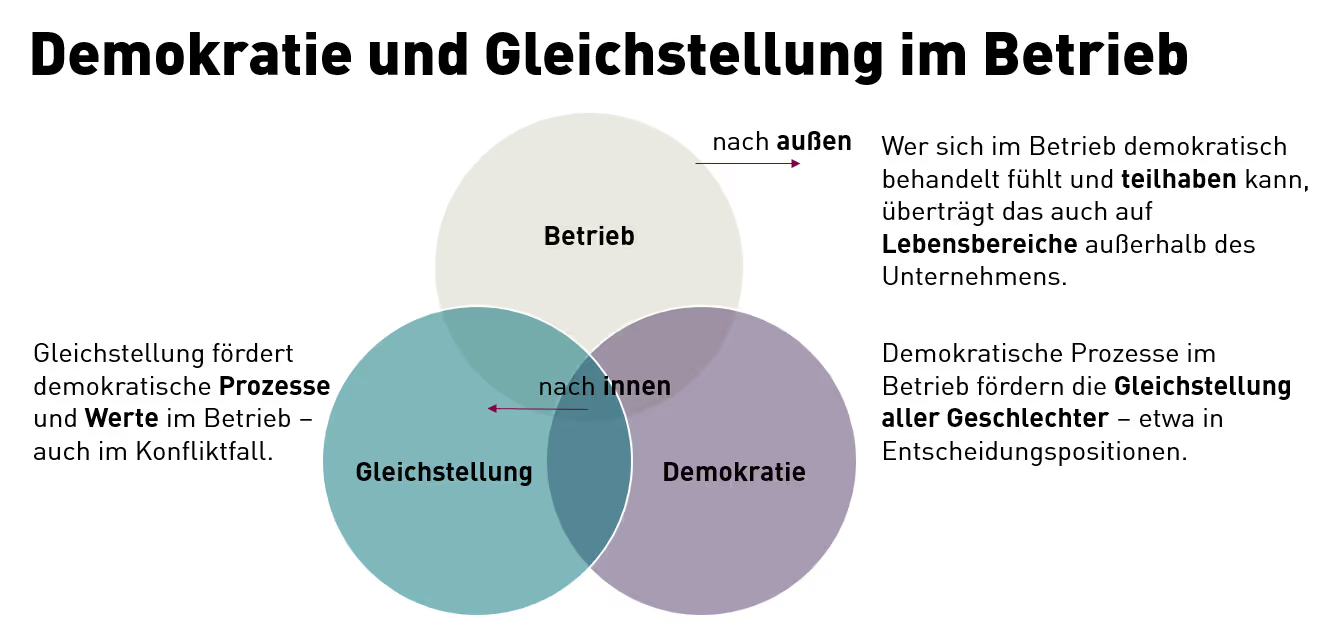
Co-determination and equality go hand in hand: where employees experience genuine participation, the chances for fair working conditions for everyone increase. This is especially true for women and other marginalized groups who often have less influence on corporate decision-making processes. A corporate culture that takes gender equality seriously relies, for example, on transparent salary structures, clear career paths, and care-sensitive working time models.
Why co-determination is crucial for equality
Works councils as drivers of gender equality
Workplace co-determination ensures that the interests of all employees are heard. Works councils therefore play a key role in implementing measures that promote equality, such as binding quotas for leadership positions or discrimination-sensitive recruitment processes.
Collective bargaining agreements and works agreements that promote equality
Collectively agreed working conditions reduce structural wage discrimination and create standards for fair pay that can ideally be transferred to other companies or industries (spill-over effect). Furthermore, it is crucial that many, not just a few, feel invited to get involved, for example in a works council, an employee representative body, or in employee resource groups or working groups.
Gender-equitable leadership culture
When decision-making processes are designed collectively and with sensitivity to diversity, work environments emerge in which women and other marginalized groups are not just "included in the conversation," but can actively help shape things. This diversity of perspectives, in turn, can have a positive impact on productivity, innovation, resilience, and the employer brand.
Recommendations for action: What companies and employees can do
- Employers can strengthen democratic structures by involving employees in decision-making processes, creating spaces for dialogue, ensuring pay transparency, and implementing targeted support programs for women and other marginalized groups.
- Employees and representative bodies can actively advocate for equality measures, strengthen networks and works councils from within, and address discrimination based on their own resources, for example by acting as an active bystander rather than a silent observer.
- Furthermore, policymakers and society are called upon to further develop legal frameworks to continue strengthening co-determination and equality in the workplace.
Conclusion: Democracy and equality go hand in hand
True gender equality in the workplace does not happen on its own—it requires democratic structures that enable co-determination and participation, perhaps now more than ever. International Women's Day (also known as International Feminist Day to highlight the explicit critique of power and intersectional perspectives that go beyond binary gender roles) serves as an important reminder that equality should not just be a concern for one day a year, but a fundamental component of a fair, future-oriented, and, above all, proactive workplace. Companies and organizations that recognize this are investing not only in equal opportunities for their employees but also in their own economic success—now and in the future.
Would you like to take action on democracy and equality in your workplace? Contact us by February 28, 2025, to become part of an innovative pilot project. You can find more information and contact details here: https://www.eaf-berlin.de/was-uns-bewegt/news/artikel/unternehmen-gesucht-fuer-modellvorhaben-demokratie-und-gleichstellung-im-betrieb
Kontakt
Wenden Sie sich gerne an die zuständige Ansprechperson:
Hanna Völkle
Senior Expert

Weitere Einträge in unserem Blog
.png)


Subscribe
the EAF Berlin newsletter
Stay up to date

Would you like to actively implement diversity and equal opportunities in your organization?
There is no "off-the-shelf" consulting process. Therefore, all EAF Berlin's offerings are tailor-made and range from a single strategy workshop to a multi-year project. Our clients benefit from EAF Berlin's broad portfolio: