
Femtec: A success story – and its lasting impact

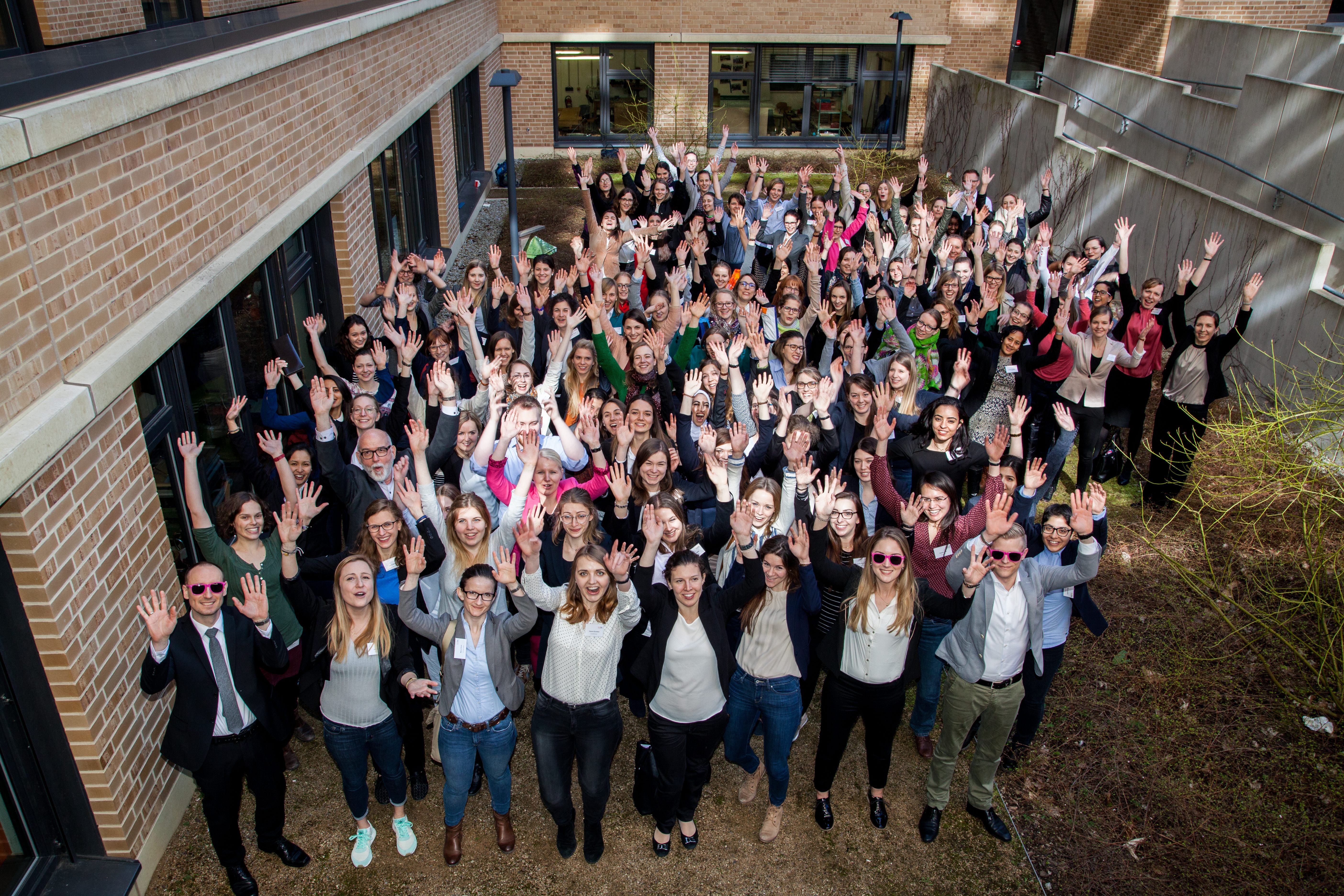
For more than two decades, Femtec has empowered women in STEM, built networks and opened up pathways in science, business and public administration. With the organisation’s closure in April 2026, an important chapter comes to an end – yet its impetus, experience and connections will continue to have an impact far beyond this moment. A blog post by Femtec Managing Director Marion Zessner.
A farewell with alasting impact
Since 2001, Femtec has pioneered support for women in STEM, building a unique network between females talent, leading technical universities and colleges, and internationally active technology companies. In doing so, Femtec has not only raised the profile of gender equality in STEM subjects but has also driven it forward in practical terms.
After many successful years, Femtec will cease to exist as an organisation at the end of April 2026. This marks a turning point – and at the same time an opportunity to look back on a remarkable history of development. Femtec has not only empowered women in STEM careers, but has also created strong networks and brought about lasting change to existing structures.
Femtec’s departure is therefore more than just the end of an organisation. It is also a moment of recognition: for work that, over many years, has opened up new perspectives, boosted self-confidence and forged new links between universities, companies and talented individuals.
The issues Femtec stands for will continue to have an impact – in professional careers, in established networks and in new contexts where this work can be carried forward.
The founding of Femtec
The emergence of Femtec was closely linked to a clear set of problems. At TU Berlin, the proportion of female students in many STEM degree programmes was very low: in electrical engineering it was under 10 per cent, in computer science and mechanical engineering under 20 per cent. Added to this were high dropout rates, significantly higher unemployment among female engineers and computer scientists, less professional experience, and lower entry-level positions compared to their male colleagues. At the same time, there was a lack of visibility for women in STEM – and thus also a lack of role models.
Against this backdrop, the idea emerged for a career-building programme, based on the approaches successfully tested at EAF Berlin for developing the next generation of female specialists and managers, which pursued several objectives simultaneously: Female STEM students were to network across disciplines, acquire key skills for their future careers and be able to establish contacts with potential employers whilst still studying.
At the same time, the aim was to raise the profile of successful female engineers and scientists –not only as role models for the participants themselves, but also to make STEM degree programmes more attractive to young women in general.
One example of this was the “Try-it-Workshops” at TU Berlin, which Femtec ran from 2001 to 2016. These workshops gave schoolgirls practical insights into technical and scientific fields of study and careers, allowing them to experience STEM professions at an early stage.
The foundation: a new model
Based on this idea, Femtec GmbH was founded at the end of 2000. The shareholders were EAF Berlinand TU Berlin, and the managing director was Dr Helga Lukoschat.
The business model was designed as a public-private partnership between universities and companies:universities advertised the programme to their female students and selected the participants. Companies, in turn, funded Femtec through annual contributions and were given the opportunity to get to know the participants at an early stage – just as the students were able to gain insights into potential career fields and employers.
In June 2001, the first course finally began with 20 female students from TU Berlin. Among the first partner companies were Boston Consulting Group, DaimlerChrysler AG, Porsche AG, Siemens AG and Wintershall AG. Even this first course demonstrated the potential of the approach: to bring together career development, networking and practical relevance not just after graduation, but from the very start.
Growth and Milestones
Femtec continued to develop dynamically right from the early years. In 2003, Femtec GmbH received funding from the Federal Ministry of Education and Research (BMBF). An important milestone followed in April 2006: Following the expiry of the pilot funding from the BMBF and the inclusion of further leading technical universities and technology companies, the Femtec Network was able to become self-sustaining. This was a strong signal of the model’s stability and relevance. A particularly significant step was the founding of Femtec. Alumnaee.V. in August 2008 by former participants of the career-building programme. Since 2025, the association has been known as CURIA e.V. Between 2018 and 2023,19 winners were honoured with the Femtec Award in the categories of Leadership, Innovation and Social Impact. In the Career-Building Programme, 13 partner companies collaborated with 10 technical universities up to the end of 2023. The “Career-Building Elements” programme for STEM female students at technical universities of applied sciences brought together 9 partner companies and 6universities.
Impact that extends beyond the programmes
Since 2000, Femtec has built up an exceptional network of committed and talented women in STEM, internationally active technology companies, and leading technical universities and colleges.
Since 2001, more than1,700 alumnae have completed numerous workshops and training sessions on career development during 51 schools at TU Berlin. As part of the ‘Talent Take Off’study orientation programme in cooperation with the Fraunhofer Society, 55 events reached nearly 1,800 school pupils and first-year students.
In total, more than3,500 people with an enthusiasm for STEM subjects have taken part in the Femtec programmes since 2001.
However, the true impact of Femtec cannot be measured by numbers alone. It is also evident in CVs, career paths and in the matter-of-fact way in which former participants now take on roles of responsibility in science, business or administration.
Many alumnae now serve as female role models in STEM, shaping teams, leading projects, making decisions and helping to ensure that equality in their organisations is not merely an abstract concept but is put into practice.
Over 1,000 women are also involved in CURIA e.V. There, the spirit that has shaped Femtec over the years lives on: trusting exchange, mutual support and the experience of being part of a strong network.
Perhaps this is precisely one of Femtec’s most important legacies: not just having developed programmes, but spaces in which courage, guidance and solidarity could flourish.
Why Femtec is ending
Since 2024, there have been numerous withdrawals by partner companies and partner universities. As a result, the previous business model lost its long-term economic viability. To avoid the risk of insolvency, the shareholders on the Femtec Supervisory Board decided in 2025 to phase out all Femtec programmes and to dissolve the organisation at the end of April 2026.
This decision marks a significant turning point. At the same time, it makes it clear that even successful models must adapt to changing circumstances. In this sense, the end of Femtec is not merely a conclusion, but also a transition.
What remains – and what continues
Femtec is ending as an organisation, but not as an idea. The questions that have driven Femtec from the outset remain relevant: How do we attract more women to STEM? How do we support them on their journey? How do we create fairer access, greater visibility and better structures in academia and industry?
The answers to these questions will be further developed in the future within different contexts, partnerships and formats. That this is possible is also due to the fact that Femtec has laid the groundwork over many years – academically, institutionally and personally.
Part of this ongoing impact lies within the network itself: in the alumnae, in the partner institutions and in the people who have built, supported and developed Femtec. Another part lies in the experiences that can now be incorporated into new funding bodies and future programmes.
A personal tribute
An organisation like Femtec cannot be described solely through programmes, key figures or structures. It is always also linked to the people who have shaped it: to the female students who embraced new challenges, to the alumnae who have carried the network forward, to partners in universities, colleges and companies, and to all those who have shaped this work with conviction over many years. Form any, Femtec was a place of new beginnings.
Femtec became a place where initial contacts turned into sustainable networks. A place where self-doubt could give way to self-confidence. And a place where it became clear: women in STEM are not the exception, but the future. Precisely for this reason, this retrospective is intended not only as a review, but also as a tribute. Perhaps for some, Femtec was the first time they experienced, in a professional context: I belong here. I am seen. I am not alone with my questions, ambitions and experiences.
What remains is an impressive story
With the end of Femtec, a formative organisation for women in STEM comes to an end. What remains is an impressive story of networking, support and structural change.
Femtec has supported careers, facilitated exchange and helped shape equality in STEM over many years. Saying goodbye is not easy. But it also draws our attention to what carries us forward: the alumnae, the collaborations, the experiences – and the ideas that will continue to have an impact in new contexts.
Testimonials
Rosa Meckseper, now Managing Director of B&R Germany | A Member of the ABB Group –participant in the programme at TU Berlin (2002–2006)
“Femtec has reinforced my natural curiosity and thirst for knowledge, and shown me how valuable it is to ask questions and think big. At TU Berlin – at the time the first and only member university – I found a second home: intense years with 20like-minded, inspiring STEM students: a vibrant network, full of exchange, growth and new perspectives. I would also like to highlight the very approachable nature of Sonja Roth, whose attitude and understanding of leadership left a lasting impression. Equally, memorable was my experience with Heike Tyrtania from Daimler AG, who, without further ado, took my CV with her to São Paulo to the commercial vehicle production facility. That moment impressively showed me that opportunities arise where people believe in others. Through Femtec’s exceptionally exciting corporate partners – such as Daimler Truck, Telekom, Porsche, ABB, BCG and Winter shall – I gained many valuable internal insights and, above all, took one thing away with me: confidence in my own path, positive energy and the courage to really think big. Today, I carrythis attitude forward – as Managing Director of a Femtec member company.”
Denise Helwerth, participant in Femtec Course 12 (2009–2011) and now Director of Digital Transformation at Robert Bosch GmbH -
“The year is 2007. I am sitting – along with 200 other, mainly male students – in the lecture theatre at the University of Stuttgart on the Aerospace Engineering course, just before my intermediate exams. And that is precisely the moment when Ifirst hear about a career-building programme and Femtec GmbH. I’m curious, apply and am accepted into the programme.
Then the first school in Berlin. I learn a lot about career planning, setting goals and identifying where I want to be, and job application training – all topics that don’t usually feature in a technical degree course. But above all, I learnt one thing – I am not alone. They do exist: other ambitious women in male-dominated fields. I found the role models and like-minded people I needed to continue on my path.
After the programme, there is the opportunity to join the alumnae association – now CURIA– the network for women* in STEM. I’m delighted that there’s a way to keep that incredible spirit alive. The Femtec idea lives on in CURIA – today as a network for women* in STEM, which is also open to non-Femtec graduates.
Today, I’m Director of Digital Transformation at a former sponsor of the Career Building Programme, have a young daughter and work full-time. I also took on a board role at CURIA last year. That was my journey – not always easy – but always with the certainty that there is no reason why I shouldn’t be able to achieve something if others before me could. I owe this self-confidence and determination to Femtec GmbH.
And today I stand here with the realisation that I have now become a role model for other women myself. And that makes me incredibly proud.”
Kontakt
Wenden Sie sich gerne an die zuständige Ansprechperson:

Weitere Einträge in unserem Blog

.png)




Subscribe
the EAF Berlin newsletter
Stay up to date

Would you like to actively implement diversity and equal opportunities in your organization?
There is no "off-the-shelf" consulting process. Therefore, all EAF Berlin's offerings are tailor-made and range from a single strategy workshop to a multi-year project. Our clients benefit from EAF Berlin's broad portfolio: