
Lesbian Visibility Day has been observed annually around the world on April 26 since 2008. This day is dedicated to celebrating lesbian women, honoring lesbian culture and diversity, and drawing attention to persistent inequalities and mechanisms of discrimination.
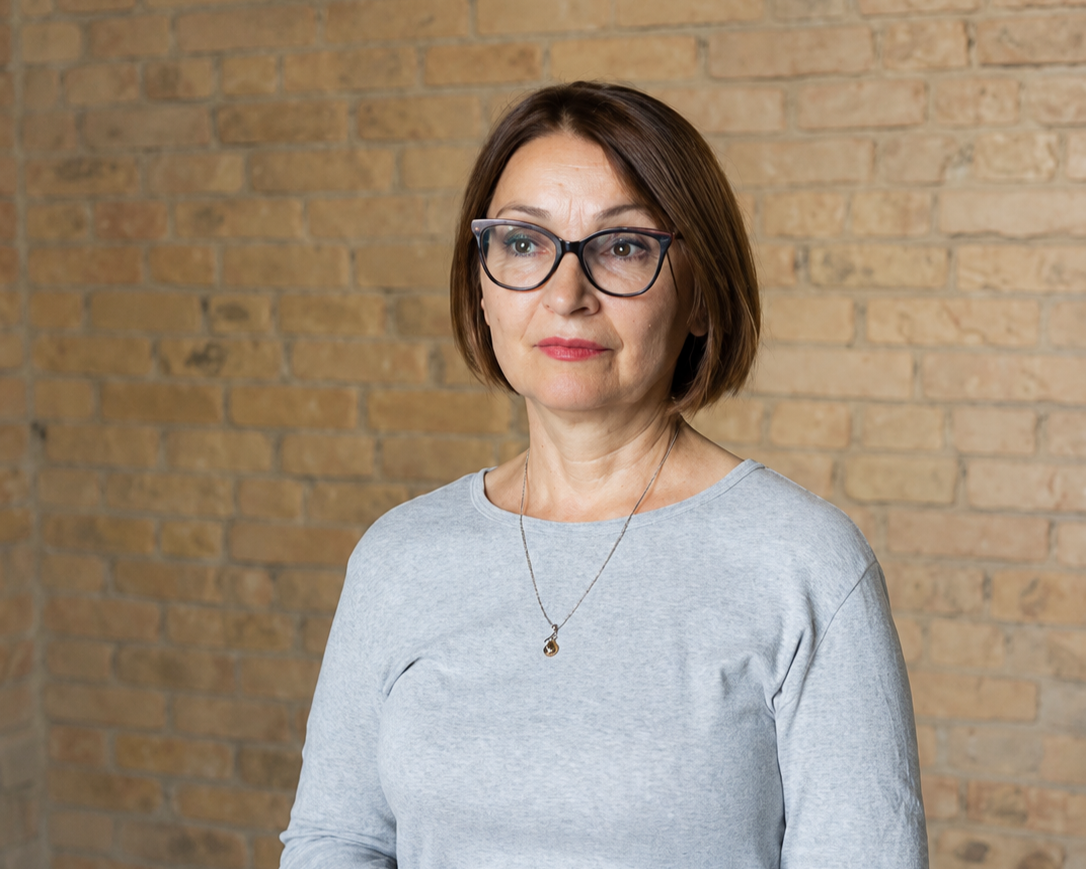
To mark International Lesbian Visibility Day, we are conducting an interview today with diversity and inclusion expert Jessica Gedamu. She works as Global Director of Diversity and Inclusion for Springer Nature. In this role, she develops and implements the global diversity and inclusion strategy for the leading global science, education, and professional publisher. From 2011 to 2017, Jessica Gedamu also held various positions at EAF Berlin, most recently as Director responsible for organizational development and corporate clients. She is also a volunteer with the nodoption initiative , advocating for the recognition of the realities of queer families.
Today is Lesbian Visibility Day, a day intended to bring lesbian visibility to the forefront. Which topics are particularly important to you today?
It is important to me that lesbian women, just like other non-gay identities, gain more visibility within the LGBT*IQ community and our society. Just as structural discrimination negatively impacts women, lesbian women are affected by it in multiple ways—lesbian trans women and women of color even more so. More visibility means, for example, that interviews, panels, images, stories, and historical records reflect the diversity of the LGBT*IQ community. It means that the life situations and intersectional needs of different groups are considered, and that the group that shouts the loudest, is best organized, and is comparatively the most privileged does not end up with the most access to resources. We need this day so that lesbians and women in the LGBT*IQ community are not largely invisible 364 days a year. To change that, we need a shift in thinking and inclusive action, both in society and within the LGBT*IQ community.
You work at Springer Nature as Global Director of Diversity & Inclusion and were named one of the 100 most successful out executives in Germany. What role has coming out played in your career path?
In reality, there isn't just one coming-out; you actually do it over and over again. Generally, people usually assume I am straight—lesbian (in)visibility and heteronormativity go hand in hand here, leading people to assume heterosexuality is the default. Early in my career, however, I had a job where I wasn't out because I was unsure how it would be handled in the company. That was exhausting and eventually became a burden because hiding and filtering information took a lot of energy. After that, I dealt with it proactively and often consciously mention my wife or my queerness in passing during initial conversations in new work situations. For this reason, I also find the visibility of out executives so important, because it signals an open environment and encourages others to be comfortable with their sexual orientation. Since I’ve had a child, this has come into even sharper focus for me: my parenthood constantly confronts me with the discrimination that queer families are still exposed to, and I would love to see many more visible role models. To exchange ideas, organize, and make it clear that families are diverse.
On the other hand, I think it’s great that in my role as Director of Global Diversity, Equity and Inclusion for Springer Nature, I can actively contribute to LGBT*IQ inclusion. This includes, for example, supporting and building our global LGBT*IQ network, Springer Nature Pride, which now has chapters in London, Berlin, Heidelberg, New York, and India. It also encompasses the equality of LGBT*IQ individuals in all areas of the company—whether through the publication of an LGBT+ Basics Guide, the inclusion of pronouns in signatures and HR databases, the introduction of inclusive language, or through events on topics like allyship and much more.
The private lives of lesbian women should also be a focus on Lesbian Visibility Day. You are involved with the nationwide initiative nodoption, advocating for queer families and demanding the recognition of both parents as legal parents from the moment of a child's birth. How exactly do you go about this?
At nodoption, families have joined forces to demand a reform of descent law. Rainbow families are still discriminated against under current descent law. When a child is born into a marriage between a man and a woman, the man is automatically entered as the father on the birth certificate. For unmarried couples, men can acknowledge paternity. Partners who are female, have a "diverse" gender entry, or no gender entry are currently denied both. Instead, only the person who gives birth to the child is registered as the mother and is legally considered a single parent. This also applies to my family. With the currently required stepchild adoption, the second mother or second parent must adopt their own child. With nodoption, we are fighting this through strategic litigation. Specifically, this means we have filed applications with the family court to establish the legal parent-child relationship. If a case is rejected by the family court, we file an appeal in the next instance. If the second instance also issues a negative decision, a constitutional complaint could then be filed. However, in April, two second-instance courts ruled that they consider the descent law unconstitutional and referred both cases to the Federal Constitutional Court for a decision. A great milestone for nodoption!
As you mentioned, two couples have been able to achieve legal successes in this regard in recent weeks. The Higher Regional Court of Celle considers it unconstitutional that in two-mother families, both spouses are not automatically entered as mothers on the birth certificate. This question will now be clarified before the Federal Constitutional Court in Karlsruhe. How likely do you think it is that the court will order a reform of the descent law?
I hope very likely! But in truth, I cannot say, especially since the decision could unfortunately take a good two to three years. It is certainly positive that the Constitutional Court has already been presented with two cases that were deemed unconstitutional in lower courts. If more cases are added, this will certainly increase visibility and pressure. This is especially true for family constellations that differ from the current cases—married lesbian cis women. The more diverse constellations that are presented to the Federal Constitutional Court, such as unmarried couples, constellations involving private sperm donation, people with a "diverse" gender entry, or multi-parent constellations, the more likely a far-reaching reform becomes.
Kontakt
Wenden Sie sich gerne an die zuständige Ansprechperson:
Jessica Gedamu
Diversity & Inclusion Expert

Weitere Einträge in unserem Blog
.png)


Subscribe
the EAF Berlin newsletter
Stay up to date

Would you like to actively implement diversity and equal opportunities in your organization?
There is no "off-the-shelf" consulting process. Therefore, all EAF Berlin's offerings are tailor-made and range from a single strategy workshop to a multi-year project. Our clients benefit from EAF Berlin's broad portfolio: