Taking sexist hate speech seriously as a human rights issue
On December 10, 1948, the United Nations General Assembly adopted the Universal Declaration of Human Rights (UDHR). Today, human rights violations are still being committed in full view of the global public. Added to this are new challenges such as sexist hate speech in public and digital spaces. On the occasion of Human Rights Day, EAF expert Laura Giardina demonstrates that sexist hate speech is a human rights issue and explains how it can be combated.
The UDHR is considered a milestone document in international law. However, in light of the multiple human rights crises worldwide, 75 years of Resolution 217 A (III) is no cause for celebration. Rarely has it been more important to protect and strengthen global human rights systems [1].
The history of (universal) human rights
The idea of "human rights" by no means began in 1948. In a national context, they were codified, for example, in the 1776 Virginia Bill of Rights, the 1789 Declaration of the Rights of Man and of the Citizen, and in fundamental rights catalogs of state constitutions in the 19th century. The problem: they were not universal, meaning they did not apply everywhere and to everyone. It was not until 1948, following the events of the Second World War, that the "turn to rights" led to international human rights protection by the community of states (UN). Not only were human rights intended to be universal rights belonging to every person (Art. 2 UDHR), but they were now understood as a political-moral doxa[2]—a self-evident truth that should neither be criticized nor questioned. What is certain is that, for the first time, there was an agreement on globally applicable human rights based on a shared understanding of human dignity.
New challenges in a new era
Today, researchers are investigating the state of human rights in a digital and globalized world. They ask: How are the multiple crises worldwide changing the way we handle human rights? They also note that issues surrounding climate justice, corporate responsibility in global supply chains, refugees and migration, as well as the cross-border shift to the right and the rollback of women's rights—such as the overturning of "Roe v. Wade," the landmark U.S. abortion ruling, the Taliban's takeover in Afghanistan, or the violence of the morality police in Iran—make it essential to address societal transformation processes and their impact on human rights protection.
Women's rights are human rights
Speaking of women's rights: As early as 1966, there were measures to more firmly anchor women's rights in the UDHR. In 1979, they were codified by the Convention on the Elimination of Discrimination against Women (CEDAW), which obligated states to implement them. The 2011 Istanbul Convention was signed by 13 Council of Europe member states and recognizes gender-based violence as a human rights violation. Nevertheless, international non-profit organizations warn that progress in the areas of women's rights and gender equality is being reversed.
Sexist hate speech and political participation
"One step forward and three steps back": Feminists know this feeling all too well. The more women hold positions of power, the louder antifeminist voices and sexist hate speech become. And this is not only directed at cis women[3], as seen in the discourse surrounding the Self-Determination Act. Sexism is defined as discrimination and degradation based on gender—online or offline. Many women and girls, as well as people who do not conform to binary gender concepts, experience sexist, misogynistic, or discriminatory statements or insults on a daily basis. Sexist hate speech is particularly widespread in politics and has an impact on political participation.
A culture of accepting sexism—in Germany and worldwide
In 2020, reporters heard U.S. Congressman Ted Yoho call his colleague, Congresswoman Alexandria Ocasio-Cortez, a "bitch." In a subsequent speech, Ocasio-Cortez emphasized: "This issue is not about one incident. It is a cultural problem" and "it is about a culture of accepting violence and violent language against women and a power structure that supports that." The EAF Berlin study "Party Cultures and the Political Participation of Women" showed the impact that sexism and violence have on women's political participation in Germany. The problem is structural: A total of 40 percent of the female politicians surveyed have experienced sexual harassment; among those under 45, the figure is as high as 60 percent. Across all parties, reports are made of inappropriate, suggestive remarks about appearance, figure, or clothing, as well as appraising gazes used to size women up. One politician interviewed for the study recalled a situation in which a woman was sexually insulted by a party colleague. The woman in question subsequently left the party.
The data remains sparse to this day; more empirical figures and evidence are needed. However, when sexist hate speech is examined as a subject of empirical social research, the numbers are clear. This is also the case in Brazil, for example: The MonitorA project by the NGO AzMina[4] investigated (sexist) hate speech against female candidates and women in the public eye. The results showed sexist insults, threats, and attacks appearing in comments, tweets, and messages by the minute. The violence also varied among women, with multiple discrimination and racism becoming evident: In Bahia, Black candidates were specifically targeted, while in other regions, attacks focused on motherhood and sexuality. The authors conclude that gender-based violence is one of the main reasons why women consciously choose against political participation. This makes sexist hate speech a problem for democracy.
Sexist hate speech is a human rights issue
Sexist hate speech constitutes gender-based discrimination. Combating this as a matter of principle is a component of almost all human rights treaties, particularly the UDHR, CEDAW, and the Istanbul Convention. Currently, sexist hate speech is primarily treated under these frameworks in the context of gender equality as a form of violence against women. However, legal scholars are calling for sexist hate speech to be recognized and combated not only in the context of equality but also within the framework of anti-hate speech measures created by international human rights organizations, based on universal human rights.[5]
What to do about sexist hate speech (online)?
What is certain is that women, girls, and non-binary individuals are being strategically silenced by (digital) sexist hate speech and violence on the internet, and as a result, they are withdrawing from public discourse. If they are politically active, BIPoC, LGBTIQ*, or have a disability, they are attacked even more frequently[6]. However, effective structures for tracking and punishing the perpetrators are currently lacking. To protect and strengthen the political and social participation of those affected, measures must be taken—both by civil society and through legislation. As seen in Brazil, for example: Following experiences with sexist hate speech before the 2020 election, debates in the Brazilian Chamber of Deputies and Senate led to a law in August 2021 that, among other things, classifies sexist hate speech, harassment, and discrimination against political candidates as a criminal offense. It establishes standards to prevent, suppress, and combat political violence against women during elections and in the exercise of their political rights and public functions. The organization HateAid shows how civil society organizations can support the legislative process with the petition "Justice online: #StopHateMakeLaws, which is also supported by EAF Berlin. However, to prevent sexist hate speech online and offline in the long term, sexist, misogynistic, racist, and discriminatory attitudes must end. To this end, the BMFSFJ, in cooperation with EAF Berlin, founded the "Together Against Sexism" alliance in 2023, which appeals to society as a whole: sexism and its effects can only be combated together.
------------------------------------------------------------------------------
[1] Source: Human Rights Watch, World Report 2023.
[2] Source: Hoffmann, On the Genealogy of Human Rights, in: Moral Politics. History of Human Rights in the 20th Century, 2016.
[3] A cis woman is a person who was assigned female at birth and also identifies as a woman.
[4] Source: Heinrich Böll Foundation, Gender-based violence in politics - a danger to democracy, 2022 (https://www.boell.de/de/2022/09/23/genderbasierte-gewalt-der-politik-eine-gefahr-fuer-die-demokratie).
[5] Source: Sękowska-Kozłowska et al., Sexist Hate Speech and the International Human Rights Law: Towards Legal Recognition of the Phenomenon by the United Nations and the Council of Europe, 2022.
[6] Source: Hate Aid (https://hateaid.org/digitale-gewalt/#1686063637832-e1553919-c9b6)
Kontakt
Wenden Sie sich gerne an die zuständige Ansprechperson:
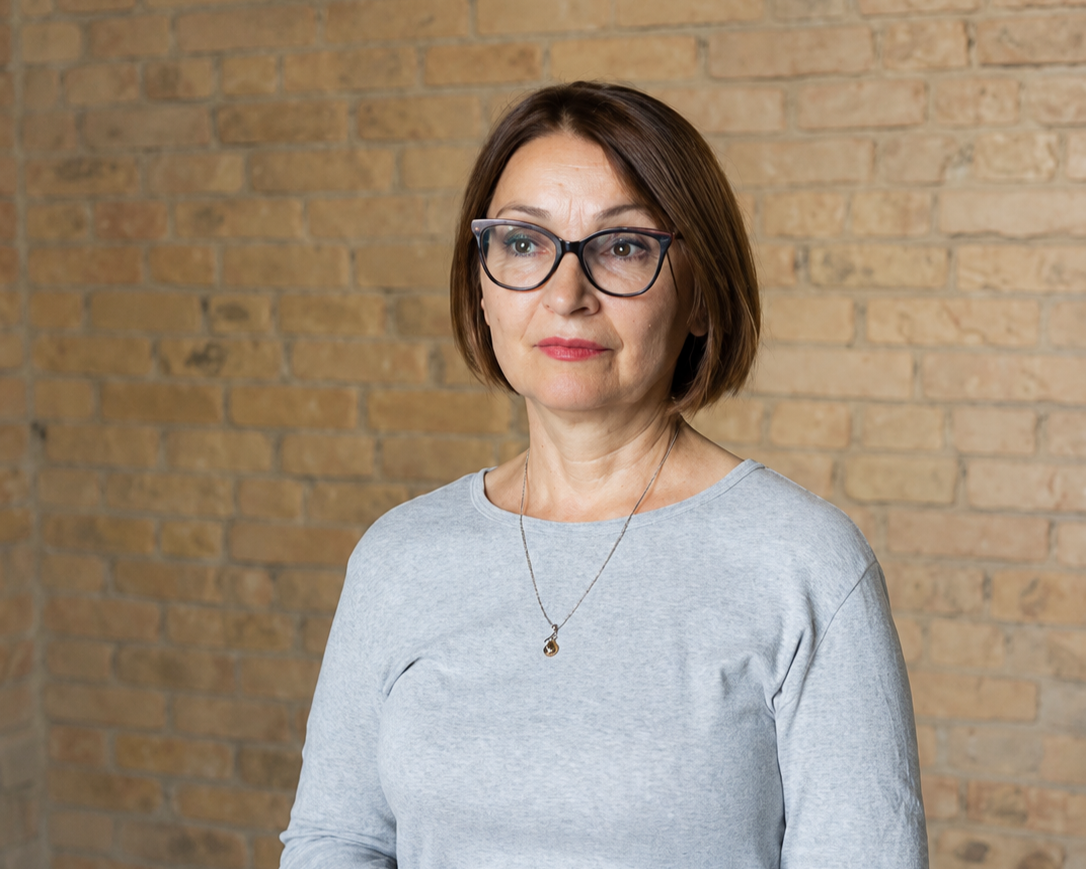
Laura Giardina
Senior Expert
.jpg)
Weitere Einträge in unserem Blog

.png)


Subscribe
the EAF Berlin newsletter
Stay up to date

Would you like to actively implement diversity and equal opportunities in your organization?
There is no "off-the-shelf" consulting process. Therefore, all EAF Berlin's offerings are tailor-made and range from a single strategy workshop to a multi-year project. Our clients benefit from EAF Berlin's broad portfolio: