Making non-binary identities visible in language

Language shapes reality. And the German language is based on a binary system. How can we rethink and retrain our language? In our team, too, we need to work on changing the binary language we have been conditioned to use for so long. But how do we do that? A blog post for International Non-Binary People's Day.
Note: This blog post is written from a non-affected perspective, and from this viewpoint, it can only be a plea for gender-sensitive speech and action.
At the 2024 Eurovision Song Contest, Nemo won with the song "The Code." Nemo is non-binary and does not identify with any gender. Nemo uses the pronouns they/them, or in German, prefers simply being referred to as Nemo [1].
Even while writing these three sentences, I notice how difficult I find it not to assign a gender to a person in my language. Whether it's using "she" or "he" as a linguistic crutch, or simply because I am used to it. It feels strange to me to do it differently. It sounds unfamiliar to me to use "they." In the reporting on Nemo, it was emphasized that Nemo is the first non-binary person to win the ESC and what that means for the LGBTQI* community. Nevertheless, Nemo was misgendered in many articles—meaning they were referred to in a way that does not correspond to Nemo's gender identity. And sometimes even in the same sentence. Why is this so difficult for many people? And above all: What must it be like for non-binary people?
What does misgendering do?
The German language is defined by two genders. It therefore excludes those who do not see themselves reflected in this binary order. Yes, exactly—non-binariness does not exist in the German language. And that is why it is up to all of us to change our language so that this changes. "For non-binary people, our language is in many respects a flawed construction," writes Lydia Meyer in the book *Die Zukunft ist nicht binär* (The Future is Not Binary). And so, there is no real alternative to "she or he." But that is only true if—as we automatically do or want to do—we insist on assigning a gender to a person.
Being addressed with the wrong pronoun makes non-binariness and non-binary people invisible. People can feel uncomfortable, overlooked, and stressed. It is hurtful. When it happens often, it is a form of discrimination and violence [2]. In environments where people do not want to come out, they are forced to accept being addressed with the wrong pronoun. Because of the German language, non-binary people are constantly exposed to having to deal with gender, talk about it, and explain themselves. That takes energy.
"If we want to carve out a linguistic existence for ourselves, we have to constantly stand out, correct others, and point out again and again that we are not male or female, but non-binary. In doing so, we risk being laughed at, not taken seriously, or perceived as pedantic or overly sensitive every single time." (Lydia Meyer, *Die Zukunft ist nicht binär*).
And yet, the responsibility to make non-binary people visible in language cannot lie solely with non-binary people. Studies show that gender-neutral language leads to less traditional gender thinking [3].
Do I like every person's name? And do I still address the person by their name and try to pronounce it correctly? Exactly.
Unconscious thought patterns lead to stereotypical thinking
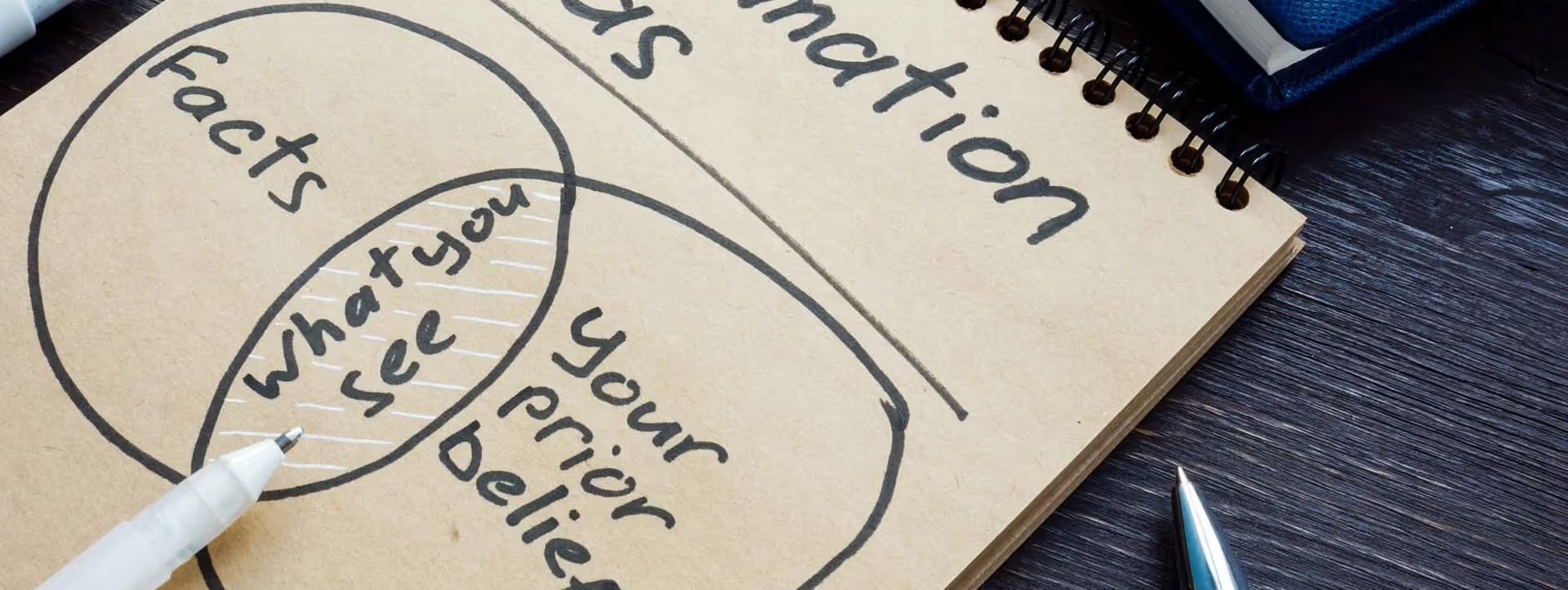
But why do I find it so difficult in the first place? One explanation is biases—unconscious thought patterns that my brain has acquired through upbringing, socialization, and society. The brain has to take shortcuts to grasp the complexity of the world. It thinks in systems and categories. However, this also leads us to sort our experiences into boxes, into stereotypes. In the worst case, these lead to discrimination, such as when people with non-German names are not offered an apartment or women are not promoted. Unconscious bias training can help to overcome these stereotypes. If I now read a non-binary person as female due to unconscious thought patterns and my learned stereotypes—for example, because of their name or clothing—I automatically assign that person a gender. Actively working against one's own prejudices and consciously paying attention not to automatically assign a gender to people is therefore an important step.
Language creates reality – non-binariness in language
Yes, I still get it wrong very often, feel insecure, or have thoughtlessly hurt people. And that, too, is part of the process. I have to accept criticism and reflect on myself attentively. "Better to make mistakes than to remain speechless," writes Lydia Meyer in the book *Die Zukunft ist nicht binär*. At the same time, I have to point it out to people when they misgender non-binary individuals, and that, too, can sometimes be difficult. Especially in a work context, for example, if you had to give feedback to a manager or if it happened in a large group. Nevertheless, it is helpful to do so in the moment—partly to explain the point to the person using a concrete example, and partly because others might be listening and can be reached as well. Thirdly, it is a public stand for non-binary people who might not want to or be able to do so themselves. It can help to follow classic feedback rules: Describe the observed behavior ("I noticed that you misgendered the person, because (NAME) is non-binary, but you used the pronoun 'she'."). In the second step, the impact and a request can be explained ("I can imagine that (NAME) feels uncomfortable with that, and I would like us all to be mindful of addressing people with their preferred pronouns or names").
So it is more about shaping a process of change together, breaking down our linguistic habits that have persisted for centuries. And that is something you can practice. However, it requires knowing the pronouns that everyone uses or knowing how people want to be addressed. So, what can you do to avoid automatically assigning a gender to people if you haven't talked about their self-identification?
- Invite people to share their pronouns during team meetings or group introductions
- Use gender-neutral terms, such as teachers, moderator, or participant
- Avoid binary forms of address and use the asterisk as a standard
- Include an invitation in your email signature to share pronouns and state your own
- Move away from gendered salutations in written correspondence and use: Hello First Name Last Name
- Neopronouns offer a way to use gender-neutral language: they, dey, xier
Nemo (musician) is a Swiss person who became known for their music career. That is how Wikipedia puts it, by the way.
Sources
[1] https://www.instagram.com/p/Czg2tCzIoZZ/?utm_source=ig_web_copy_link
[3] Lydia Meyer, The future is not binary (Lydia Meyer refers to the following sources: https://www.pnas.org/doi/10.1073/pnas.1908156116; https://www.deutschlandfunknova.de/beitrag/gendergerechte-sprache-geschlechtsneutrales-personalpronomen-hen-wirkt-sich-positiv-aufs-denken-aus?
Further reading:
Kontakt
Wenden Sie sich gerne an die zuständige Ansprechperson:
Nina Prehm
Senior Expert

Weitere Einträge in unserem Blog


Subscribe
to our newsletter
Stay up to date

Would you like to actively implement diversity and equal opportunities in your organization?
There is no "off-the-shelf" consulting process. Therefore, all EAF Berlin's offerings are tailor-made and range from a single strategy workshop to a multi-year project. Our clients benefit from EAF Berlin's broad portfolio: