
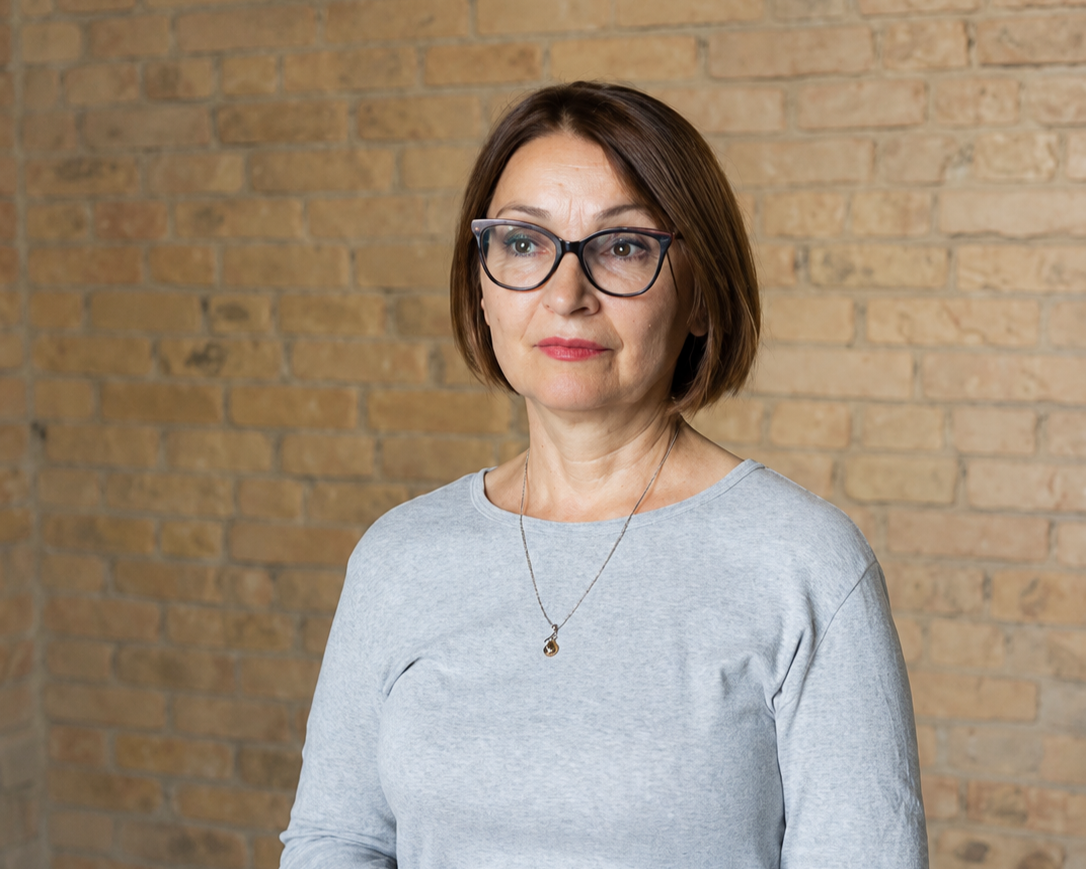
Cécile Weidhofer explains how we work on cross-border recommendations and presents measures from France to show how local political office can be made more attractive to women and people in the rush hour of life.
France as a prime example: The "loi sur la Parité"
Gender equality in politics – France is often cited as a prime example. The Parity Law was introduced in 2000, requiring political parties to ensure that women and men are represented roughly equally on candidate lists for elections. The "loi sur la Parité" applies to varying degrees to national, regional, and local elections and has been further developed several times since its adoption. It has been a success: in 1995, the proportion of women in municipal councils was 21.7%. After the last municipal elections in 2020, the share of female council members stood at 42.2%[1]. Furthermore, the Parity Law has raised awareness of gender inequality and has had an indirect impact even where it did not strictly apply: before the law was passed, 7.5% of town halls were led by women. Today, that figure is nearly 20%. Nevertheless, women remain significantly underrepresented in local political leadership positions. We are following developments in France closely.
International cooperation for more women in local politics
"Feminist foreign policy is based on the conviction that all people enjoy the same rights and deserve the same freedoms and opportunities," states the Federal Foreign Office's guidelines on feminist foreign policy. We share this conviction with our French partners and are therefore working together to ensure that people in all their diversity can choose to hold local political office. This is particularly true of our collaboration with the Observatoire de la parité d'Occitanie (the Parity Observatory of the Occitanie region), which focuses on collecting data and publishing analyses and recommendations for action to increase the number of women in politics.
We are committed to ensuring that all people can participate equally in social and political life. At the heart of our cooperation is the exchange between French and German local politicians, with the goal of learning from one another and increasing the proportion of women in politics in both countries. We organize formats that allow German and French local politicians to share experiences. We have developed joint recommendations for action to increase the number of female local representatives on both sides of the Rhine. Together, we have reflected on what we can do at the international level and have developed various recommendations for the EU: these include requirements and incentives for data collection, the continuous addressing of gender representation, and the integration of this topic into EU project and research funding, among many others.
Measures we can learn from
Even now, France is more progressive than Germany in certain areas of shaping local political office and is implementing measures that can make the role more attractive. Three measures are particularly noteworthy. They all share the common goal of enabling a local political practice that is better compatible with the professional and family obligations of representatives—especially those in the "rush hour of life."
A municipal councilor can vote by proxy
In Germany, if a council member does not attend a council meeting, their vote is lost. This can be to the detriment of their own parliamentary group, especially where majorities in the council are slim. And it can deter the next generation of local politicians: for people with family obligations and/or irregular working hours and locations, the rigid structures of local political processes are a significant obstacle. The call for more flexibility and realism is growing. What is not (yet) possible here has been a matter of course in France since 1996: a council member who cannot attend a meeting can authorize a member of their choice—not necessarily from their own parliamentary group—to vote on their behalf. No reason for the absence is required. The proxy only needs to contain the name of the authorized council member and the meeting for which it is valid. The proxy can be valid for up to three consecutive meetings and can be revoked at any time. Although it is usually issued before the municipal council meeting, the proxy can also be issued during the meeting if a council member has to leave suddenly, for example, due to family or professional reasons.
Professionalization of local politics – Further training for representatives
French local representatives are entitled to 18 days of training that they can use during their term of office. Municipal councils must deliberate on the funds provided for this purpose within three months of their inaugural meeting. They determine the priorities for these funds. Every year, the council debates the further education and training of its members. The total expenditure for training measures (e.g., participation fees, travel, and accommodation costs) must not be less than 2% of the total amount of allowances that can be granted to local politicians. These costs are among the mandatory expenditures for French municipalities.
In Germany, local representatives also have the opportunity to participate in training. Volunteer local politicians are involved alongside their regular professional and/or family obligations. Time constraints make it difficult for them to find additional time for training. French local politicians face the same challenges. However, there is one difference: participation in training and the skills acquired during the term of office can be recognized, which can promote professional integration after the term ends.
Recognition of the skills of representatives
Especially for mayors, the question of "life after office" arises in both France and Germany. Anyone who was employed before the election and was not released from their job for the duration of their term must address the possibility of professional retraining if returning to their old job is not an option. A mayor is the head of the administration and responsible for the municipality. Nevertheless, they receive no factual recognition for this. The local mandate is time-consuming and is often perceived as a career setback. Yet, local representatives accumulate a wealth of experience during their term: crisis management, technical skills, leadership, communication, project management, and much more. To better value local political engagement, among other reasons, France has offered the option to have experience as a local representative officially recognized since 2019. Local politicians go through a process and receive a degree that certifies the experience and skills acquired during their mandate. This certification, the "Validation des acquis de l'expérience" (VAE), is open to anyone with at least one year of professional experience directly relevant to the desired qualification, as well as to volunteer local representatives. The VAE is one of several instruments for assessing and recognizing skills.
However, theory and legal claims are not enough, even in France. In 2017, the French Senate[2] conducted a survey on the status of local representatives. Nearly 10,000 local politicians—mayors, district councilors, and members of municipal councils, 37% of whom were women—participated in the survey. The results confirmed a "crisis of vocation." 45% of respondents intended to leave politics after their term ended. 27.1% cited the incompatibility of office, family, and career as the reason. Since then, France has implemented reforms, particularly regarding the further training and recognition of the achievements of local representatives. Given the challenges also faced by local politicians in Germany, a nationwide, non-partisan survey would be desirable. Whether and how the framework conditions for exercising a local political mandate become more modern, family-friendly, and innovative in the coming years will ultimately determine, to a certain extent, the future viability of German municipalities.
Same challenge, shared solution: We are continuing our work
Equality has not been fully realized in any country in the world. We see that the challenges are the same, and we can work on the solutions together. We also need European and global answers. We will continue to advocate for this. In a planned project with the Occitanie region, we are working on a sustainable change in political culture toward a "culture of equality." The focus will also be on how promoting women's political participation can be linked to fundamental issues of democracy promotion and how anti-democratic and anti-feminist tendencies can be halted.
[1] The Parity Law only applies to municipalities with 1,000 or more inhabitants. However, just over 71% of France consists of municipalities with fewer than 1,000 inhabitants.
[2] "Facilitating the exercise of local mandates: challenges and perspectives" (senat.fr)
Kontakt
Wenden Sie sich gerne an die zuständige Ansprechperson:
Cécile Weidhofer
Director
.jpg)
Weitere Einträge in unserem Blog

.png)


Subscribe
the EAF Berlin newsletter
Stay up to date

Would you like to actively implement diversity and equal opportunities in your organization?
There is no "off-the-shelf" consulting process. Therefore, all EAF Berlin's offerings are tailor-made and range from a single strategy workshop to a multi-year project. Our clients benefit from EAF Berlin's broad portfolio: