New EAF project: Frauen.Vielfalt.Politik.
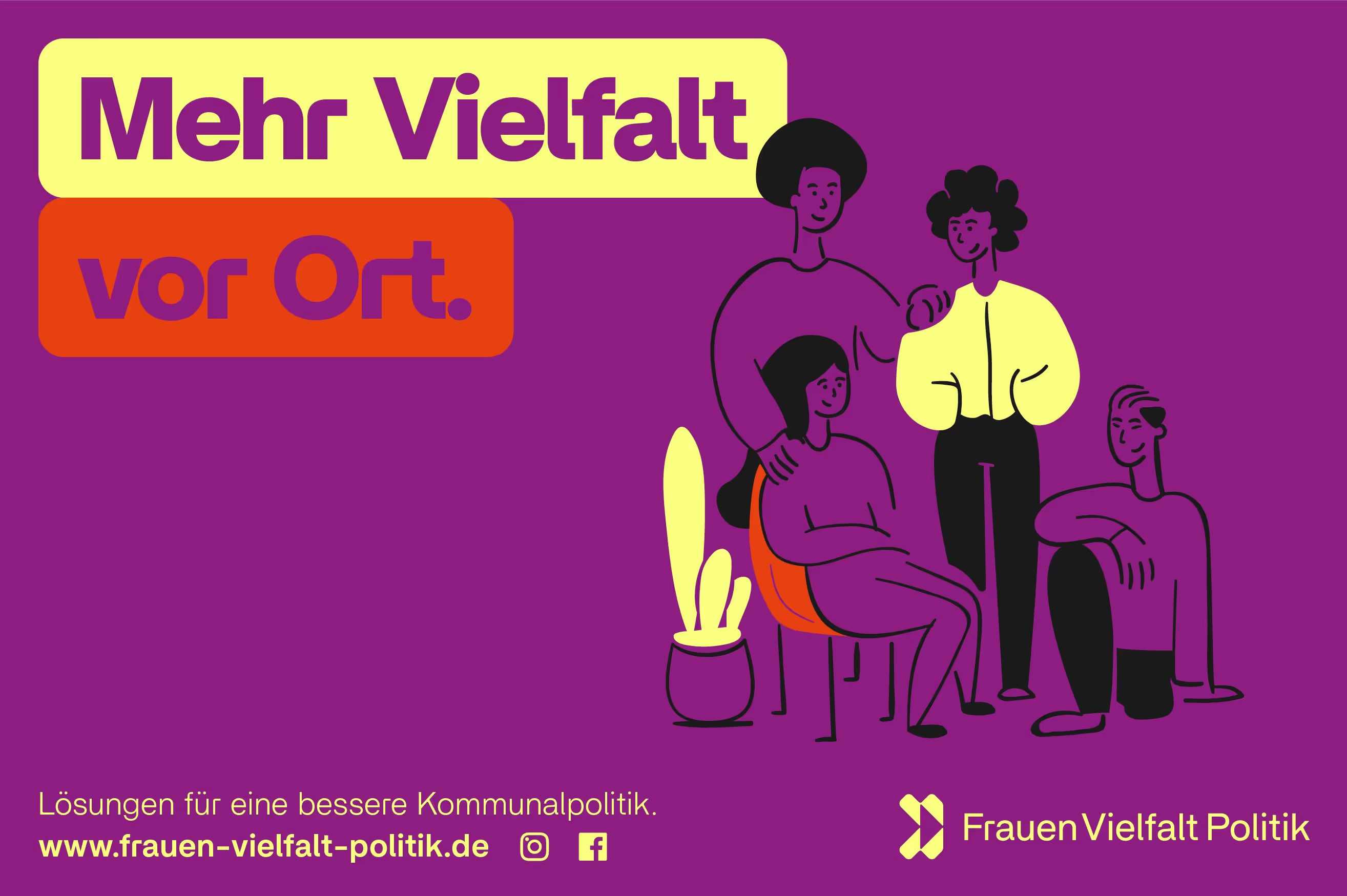
Women are significantly underrepresented in local politics: the proportion of women in local councils averages about 30 percent and varies widely—it is often lower in rural regions. The reasons for this are manifold: local political engagement requires time and money—both of which are generally less available to women than to men. Barriers to entry are evident in the difficult conditions for balancing engagement, family, and career, as well as in stereotypical gender roles that lead to the exclusion and devaluation of women. Additionally, the climate in local councils and in the public sphere is becoming harsher, and local female politicians are increasingly confronted with personal, sexist, and racist insults and threats.
The goal of the Frauen.Vielfalt.Politik. project is to dismantle structural barriers to women's political participation and to make the framework conditions in local politics more inclusive. It demonstrates how political participation can become more diverse and is oriented toward various life realities, such as those of women with migration backgrounds, single mothers, young women, and non-academics. In this way, it strengthens democracy through greater diversity in local politics.
Women in all their diversity for a strong democracy
Just as the reasons for political underrepresentation are diverse, so too are the solutions that can be implemented directly in municipalities. The offerings of the Frauen.Vielfalt.Politik. project are aimed at officeholders and elected officials, equal opportunity officers, as well as administrations, associations, and parties, supporting them in increasing the proportion of women in local politics.
Women in rural areas: Highly engaged, but rarely in office
Local politics shapes people's lives at the local level very directly. And rural development is significantly shaped at the municipal level. Central decisions affect women in their life realities to a particular degree: for example, how childcare services are designed, whether there are local care facilities and medical services, which social and cultural offerings are implemented, and what reliable mobility concepts and sustainable digital infrastructure
look like—all these are important issues for women, who often take on the majority of the responsibility for family care work and local social engagement. Therefore, the project places a special focus on providing solutions that are specifically tailored to rural areas and their conditions.
Among other things, it trains politically active or experienced rural women to become multipliers for women in local politics.
Taking action: Solutions for municipalities, implementable on-site
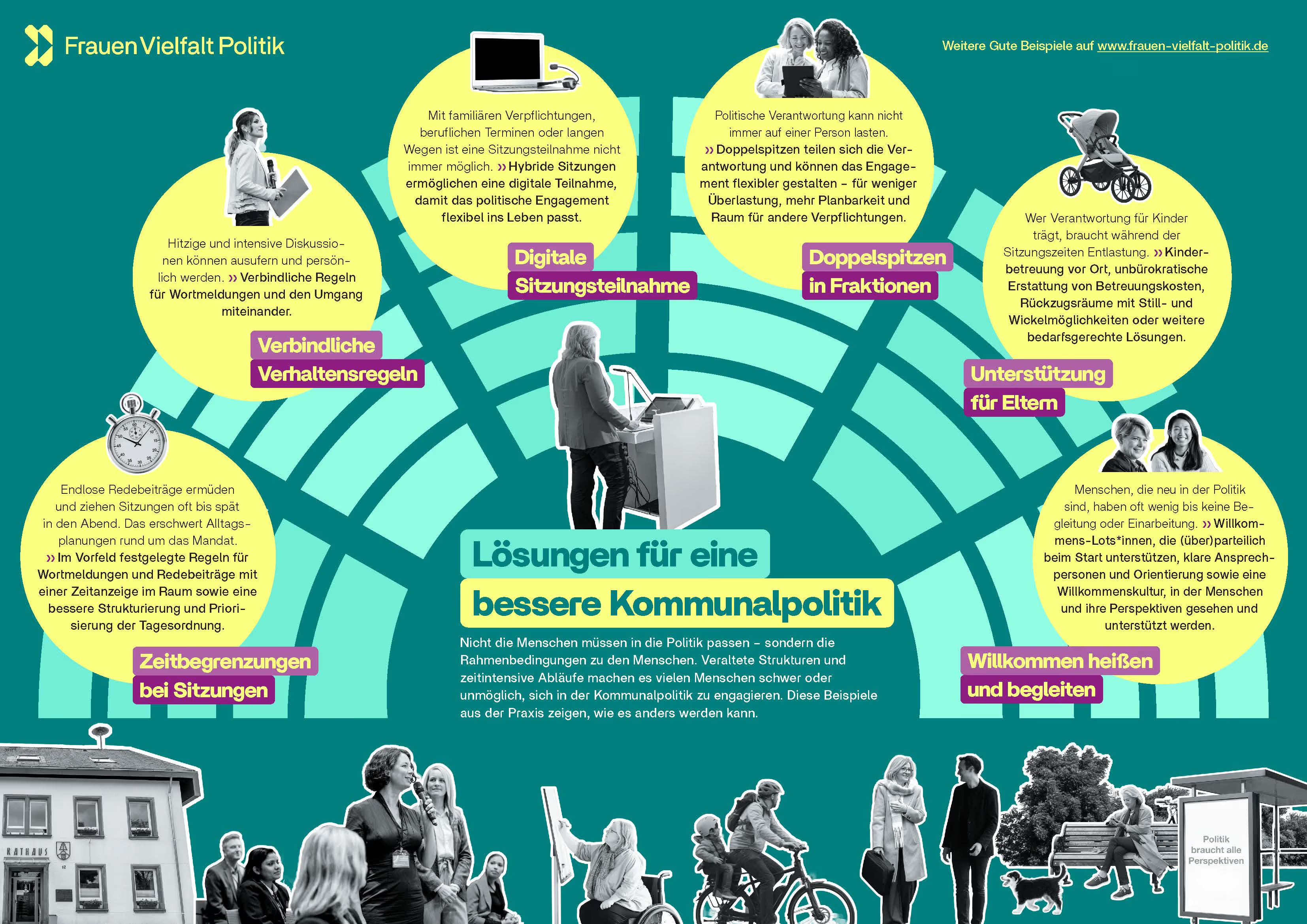
Frauen.Vielfalt.Politik. is the nationwide, cross-party contact point for municipalities, administrations, parties, and anyone who wants to make a change: how a code of conduct can improve the culture of debate, or how compatibility can be increased through meeting times or digital participation options.
But also: What arguments do I need to even initiate the topic in my municipality? The digital knowledge platform www.frauen-vielfalt-politik.de offers comprehensive information on the participation of women in local politics, highlights barriers to entry, and provides information on intersectionality and hate speech. It contains practical and successful examples from municipalities, current studies, and hands-on tips on how political participation can be promoted locally.
Municipalities can receive consulting through the project. The experts at EAF Berlin provide support in developing suitable solutions. Additionally, they visit locations to give presentations or hold workshops in the regions.
The project also strengthens cross-party networking among officeholders, elected officials, and other stakeholders and multipliers through a variety of open event formats.
More about the project
The Frauen.Vielfalt.Politik. project is carried out by EAF Berlin in cooperation with the German Rural Women's Association (dlv). The Federal Ministry for Family Affairs (BMFSFJ) is funding the project until 2027. The Frauen.Vielfalt.Politik. project is supported by a Advisory Board is supported by representatives from politics, academia, and civil society, as well as multipliers such as municipal umbrella organizations. The advisory board will hold its inaugural meeting at the Federal Ministry for Family Affairs on May 23rd to mark the project launch.
www.frauen-vielfalt-politik.de
Instagram: frauen.vielfalt.politik
Facebook: Frauen.Vielfalt.Politik