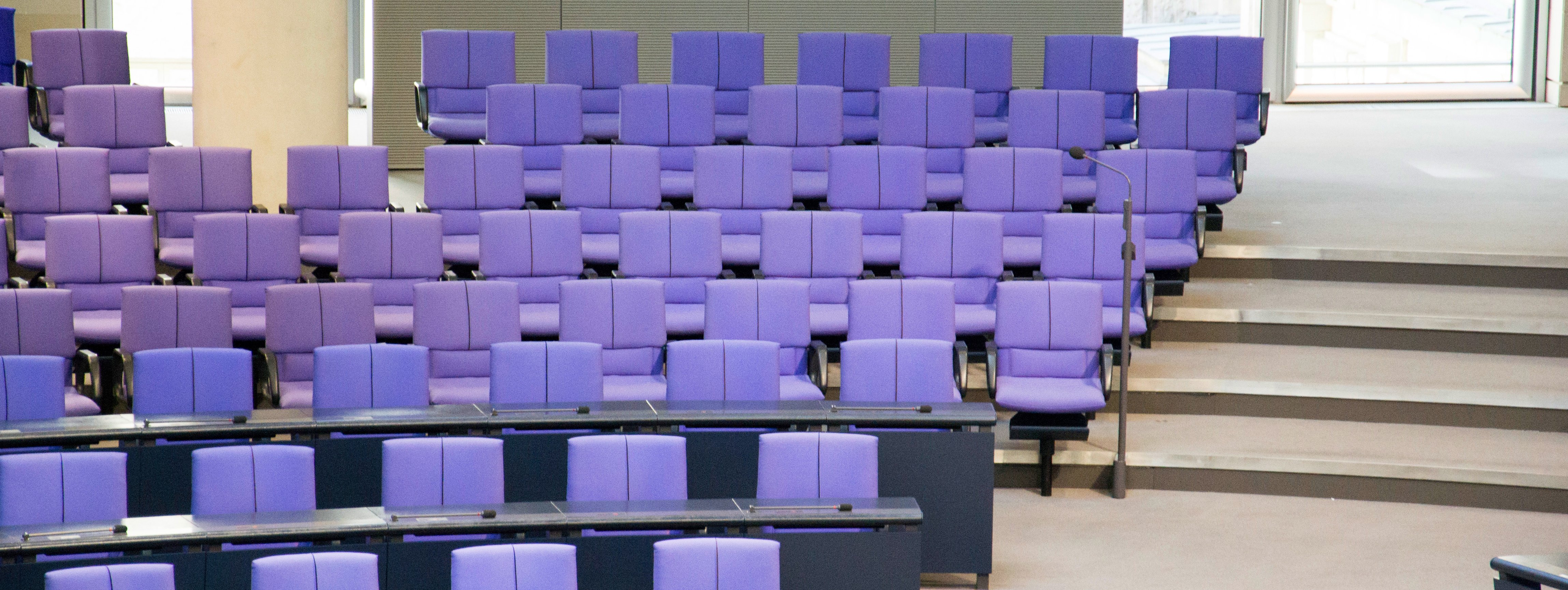
The members of the German Bundestag were given a clear mandate: as part of the electoral reform to reduce the size of the Bundestag, proposals were to be developed on how to achieve gender parity in parliament in the future.
This opportunity was thoroughly squandered. The coalition government's draft bill to reduce the size of the Bundestag does not contain a single sentence on the matter. The FDP stonewalled decisively. The SPD and the Greens could not or would not risk a coalition rift over this issue. An inter-party women's initiative, similar to the one that successfully pushed through quotas for corporate supervisory boards and which women (and men) from the CDU could have joined, also failed to materialize.
Yet, it is naturally emphasized time and again—even by the CDU and FDP—that they are in favor of more women in parliament. Gender parity is considered a desirable goal, but apparently one that should be relegated to the distant future and does not need to be addressed here and now. There is no shortage of earnest declarations, but when it comes down to it, the political will is missing, and party-political calculations take precedence.
For decades, the proportion of women in the Bundestag has stagnated at around one-third or, as happened in the 2017 election, even declined. It currently stands at 35 percent. Of the parties represented in the Bundestag, only three—led by Alliance 90/The Greens, followed by The Left and the SPD—have binding internal regulations or quotas. Without the representatives from these parties, the proportion would be significantly lower, at around 25 percent. And this in one of the largest and most important countries in the European Union. Meanwhile, countries like France, Spain, and Belgium have long had effective parity laws.
The Electoral Law Commission, consisting of members of parliament and experts appointed by the parties, was divided on this issue. Half of the experts argued in favor of a parity law, while the other half argued against it. Following the 2020 rulings by the state constitutional courts in Thuringia and Brandenburg, which declared the laws passed there unconstitutional, this was to be expected. The opponents relied on these rulings, while the proponents argued once again that the rulings were contestable and insufficiently justified, and that the final word on the matter would still be spoken in Karlsruhe by the Federal Constitutional Court.
However, while the legislature rightly takes the initiative on other issues and shows no fear of "Karlsruhe," the question of constitutionality was used here to stifle any initiative. Thus, a creative proposal from an expert to integrate mandate allocation based on parity criteria into the coalition's draft bill was not taken up in any way.
This is because a great deal is at stake. At its core, the debate revolves around the validity of Article 3, Paragraph 2 of the Basic Law and, if applicable, how interventions in other constitutionally protected goods—in the case of parity, Article 21 ("freedom of parties") and Article 38 ("freedom of election")—can be justified.
The Basic Law states unequivocally: "Men and women have equal rights." However, because indirect and direct discrimination continued to exist (and still does today), this paragraph was supplemented in 1994 with the following sentence: "The state shall promote the actual implementation of equal rights for women and men and take steps to eliminate existing disadvantages."
The debate over the interpretation and significance of Article 3, Paragraph 2 is therefore a debate of enormous relevance for the entire field of equality policy. Yet, this was also barely addressed.
Even the numerous civil society voices that had joined forces in the "Parity Now!" initiative—launched by Rita Süssmuth and the Munich-based association "Parité in den Parlamenten," and which includes the EAF Berlin—failed to mobilize and exert pressure in the way that would have been desirable and necessary.
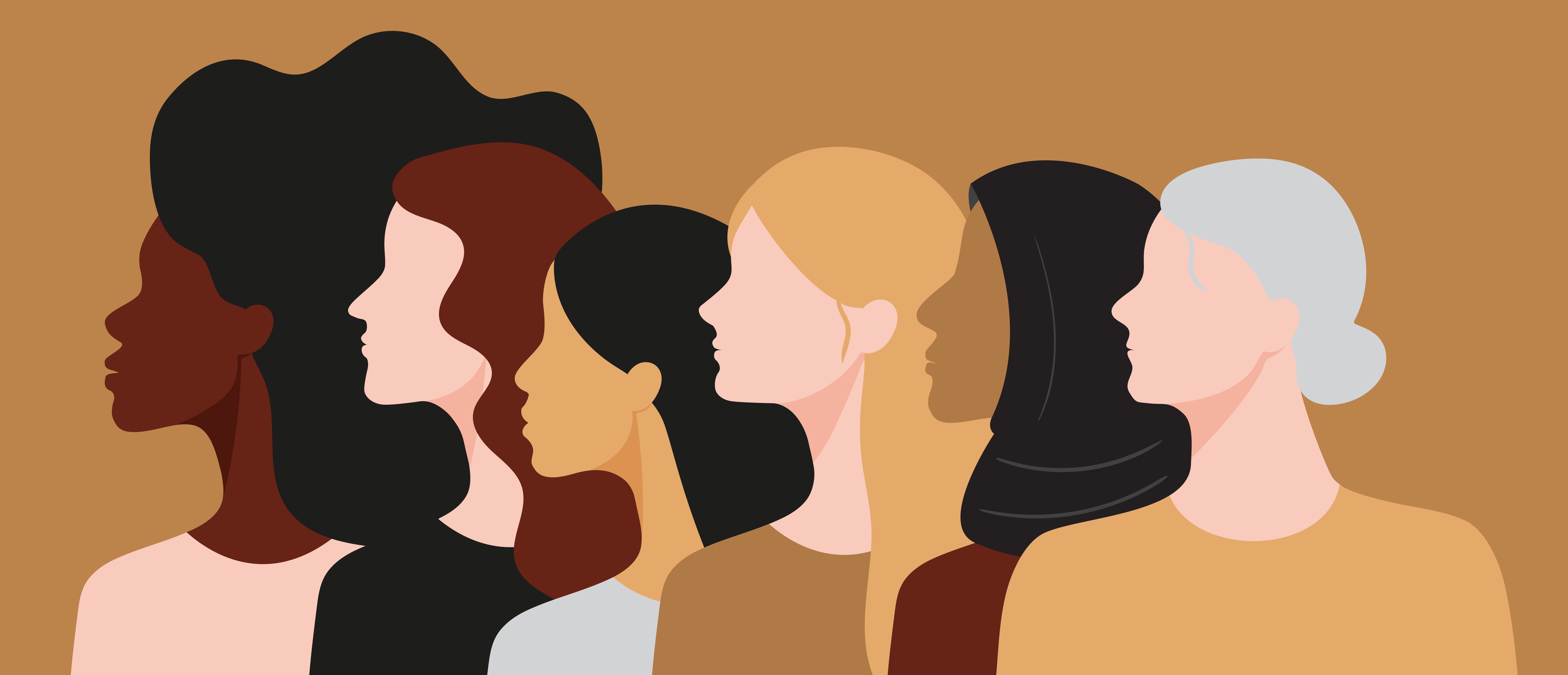
But the issue of parity has not been resolved. It remains essential to dismantle structural disadvantages and barriers to political participation, to overcome everyday sexism in politics, and to enable a cultural shift that makes party-political engagement significantly more accessible and attractive—for women and for other previously underrepresented groups. There are numerous practical proposals and measures for this, but they must ultimately be flanked by legal guardrails so that all parties know they are being held accountable. After all, beyond equality as a central value of our Basic Law, of which we are rightly proud, this is also about the further development and future viability of our parliamentary democracy.
The courageous pioneers for women's suffrage in Germany had to fight for it for about three-quarters of a century; in other countries, such as Switzerland, the struggle lasted well into the 1970s. International Women's Day, first observed in 1911, established active and passive voting rights for women as a central demand.
As Rita Süssmuth rightly says: Giving up is not an option.
Kontakt
Wenden Sie sich gerne an die zuständige Ansprechperson:
Dr. Helga Lukoschat
Senior Advisor at EAF Berlin
.jpg)
Weitere Einträge in unserem Blog
.avif)


Subscribe
the EAF Berlin newsletter
Stay up to date

Would you like to actively implement diversity and equal opportunities in your organization?
There is no "off-the-shelf" consulting process. Therefore, all EAF Berlin's offerings are tailor-made and range from a single strategy workshop to a multi-year project. Our clients benefit from EAF Berlin's broad portfolio: