35 Years of the Peaceful Revolution: Courage for Democracy

Leipzig, October 9, 1989: This is where the Peaceful Revolution began 35 years ago. The air was thick with tension. Unrest and fear hung over the city. Trucks full of riot police crowded the streets, hospitals were stocked with blood reserves, and warnings were issued in workplaces: Do not go into the city center today!
But they went anyway.
People summoned their courage, overcame their fear, and set out. Between 70,000 and 100,000 people demonstrated together that evening, forcing the regime to its knees with their peaceful protest. Today, October 9 stands as a symbol for the start of the Peaceful Revolution, which thousands of people fought for in many places across the former GDR in the autumn of 1989.
I was there, too. I was 17 at the time and part of the Leipzig human rights groups that brought the protest out of the churches and onto the streets. We are the people! we chanted, standing up against the state authorities. How great our hopes for democracy were!
And where do we stand today, 35 years later?
Following the state elections in Thuringia, Saxony, and Brandenburg, I look at "the East" with many questions and deep concern, and a different kind of fear is spreading. It is not a new fear; it has been troubling me for a long time, and it is growing ever larger.
Here, where people liberated themselves from a dictatorship, many are now prepared to give their vote to anti-democrats. The strategists of the AfD have thought this through carefully: this is where they can start. Here, where the economic situation is good, yet still significantly worse than the German average. Where people have little property, lower wages are paid, and there is hardly anything to inherit. Sociologist Steffen Mau clearly identified these persistent disparities in his recent book, "Ungleich vereint" (Unequally United). Here, where polls have shown for years that many feel like "second-class citizens," it is easiest to address this dissatisfaction. During this year's local and state election campaigns, West German AfD cadres specifically exploited East German identities, thereby validating something that is often viewed disparagingly in the broader German discourse. Quite a few people feel seen, understood, and represented by the AfD and its supporters.
People are dissatisfied everywhere in Germany
But it is not simply "the Ossi" who gets caught up by populists or, as is often discussed today, who has never left behind the mindset of the dictatorship. That would be too simplistic, far too schematic. People are dissatisfied everywhere in Germany. It is not necessarily their dominant feeling, but the dissatisfaction is there nonetheless. With the right strategy, it can be mobilized, in the West just as in the East—and as we know, in many other European countries as well. East Germany was the starting point for the enemies of democracy. Yet the European elections already showed us alarmingly high results for the AfD in West German towns as well. In this sense, East Germany can be seen as a space that anticipates a development that will spread across all of Germany—if we do not stop it.
We can do a lot to save democracy
Many are asking themselves these days: What can we do to save democracy? A lot, that is for sure! Democracy is not lost. This trend can be stopped. I would like to focus on four points here:
- Strengthen the diverse democratic civil society in the East.
So many people are involved in clubs, initiatives, companies, and associations, working for a sense of community in their home region. They do this under increasingly difficult conditions. And compared to West Germany, they have significantly fewer resources: there is less private capital, hardly any infrastructure in the form of spaces or public offices, and little funding from companies and foundations. Much of the local engagement is sustained by volunteer work and poorly funded, temporary project grants. Long-term impact and sustainable commitment are difficult to build this way, and those who try are increasingly becoming exhausted. - Improve the representativeness of democracy.
A lack of representation leads to a lack of perspectives in democratic processes, which in turn causes acceptance of and trust in democratic procedures to dwindle. Many population groups are significantly underrepresented in parties, representative bodies, and parliaments—including women, young people, and non-academics. Parties, which have largely faced a steady decline in membership over the last few decades, must commit themselves to reaching out to, winning over, and integrating new members and supporters from across the breadth of the population. They must offer them attractive, accessible opportunities for participation. Hardly anyone today has the time or inclination for the traditional, long-winded political career path. - Create more opportunities for participation.
Participation in political parties cannot remain the only form of political engagement. Back in the autumn of 1989, many people longed for more direct involvement. We should explore and utilize democratically structured forms of direct democracy much more extensively. Advisory boards, round tables, and other formats can be used to invite and incorporate diverse perspectives. In his book, Steffen Mau proposes the idea of citizens' assemblies. These are selected by lottery and support decision-making at the local level. It would be interesting to take this a step further: filling parliaments, at least in part, through a lottery system would significantly improve their representativeness and would be much better suited here than for the office of lay judge, which is already filled using this principle. - Ban the AfD.
A ban proceeding should absolutely be initiated. I am deeply puzzled by many of the arguments currently being raised against it: we have clear principles and procedures for protecting our democracy. And we shouldn't use them because it might provoke voter resentment and play into the AfD's hands? Instead, we let people believe it is a democratic party? And hand the country over to them? Do we strengthen them with vast amounts of public funding for their work, even though three of their state branches have already been classified as confirmed right-wing extremist movements? We cannot ignore that.
For an open country with free people
Back when people in East Germany liberated themselves with all their courage, hopes were high. "For an open country with free people" was written on one of the first banners in the autumn of 1989. Katrin Hattenhauer and Gesine Oltmanns unfurled it in front of St. Nicholas Church in Leipzig. It is just as relevant today as it was then, and it is featured on the invitation to the ceremony on October 9, 2024, in Leipzig. Every year, the city commemorates the Peaceful Revolution, which began here, with the Festival of Lights. Why only in Leipzig? For me, this is the true national holiday, as it was what made the fall of the Berlin Wall and German reunification possible in the first place. It serves as a reminder of the strength and hopes of the Peaceful Revolution and should be a warning of how hard we fought in Germany for this, our democracy. Let us use that strength together to do everything we can to preserve it, because We are the people!
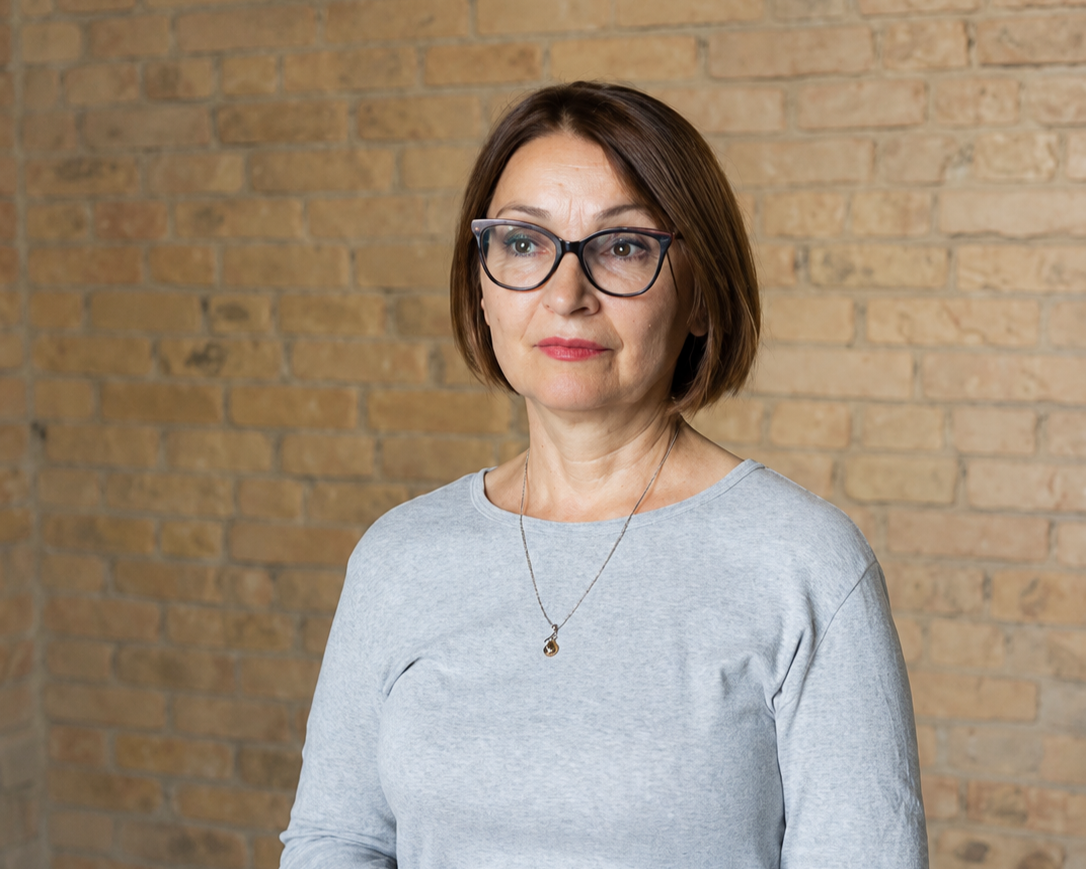
Kathrin Mahler Walther is the Executive Chair of EAF Berlin. Born in Leipzig in 1970, she was one of the youngest civil rights activists in the former GDR. Federal President Frank-Walter Steinmeier awarded her the Federal Cross of Merit for her commitment.
In 2019, in her article for Zeit Online, she demanded: “We must celebrate October 9th”
Image: Bundesarchiv, Bild 183-1989-1023-022 / Friedrich Gahlbeck / CC-BY-SA 3.0, CC BY-SA 3.0 DE <https://creativecommons.org/licenses/by-sa/3.0/de/deed.en>, via Wikimedia Commons
Kontakt
Wenden Sie sich gerne an die zuständige Ansprechperson:
Kathrin Mahler Walther
Executive Chair
_neu.jpg)
Weitere Einträge in unserem Blog
.png)


Subscribe
the EAF Berlin newsletter
Stay up to date

Would you like to actively implement diversity and equal opportunities in your organization?
There is no "off-the-shelf" consulting process. Therefore, all EAF Berlin's offerings are tailor-made and range from a single strategy workshop to a multi-year project. Our clients benefit from EAF Berlin's broad portfolio: