"Many feminists still do not understand our situation"
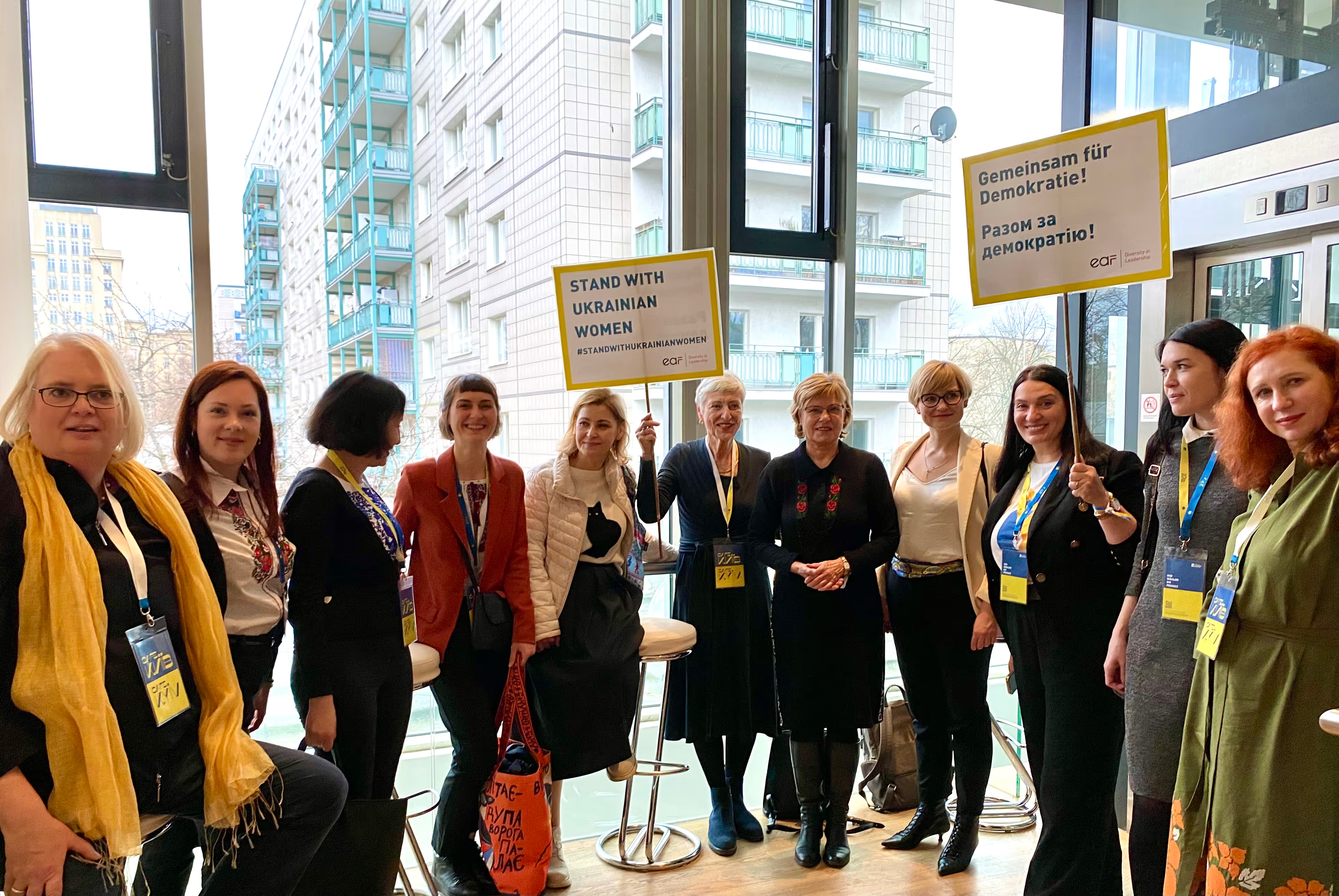
Blue and yellow dominated "Café Kyiv," the temporary transformation of the historic Café Moskau on Berlin’s Karl-Marx-Allee for four days.
The Konrad Adenauer Foundation (KAS) hosted the event at "Café Kyiv" on February 27. "We Choose Freedom" was the motto of the day, which explored the causes and consequences of the Russian attack on Ukraine and its people under martial law from a wide range of political, economic, ecological, and cultural perspectives.
KAS put together a diverse program in collaboration with numerous partners, which included a session on "The Strong Women of Ukraine." Our project, "Together for Democracy," was presented under this title, focusing on partnerships and future prospects. In a moderated panel, five Ukrainian project partners spoke about their responsibilities and tasks in daily wartime life, their perspective on the ongoing Russian aggression, and the prospects for peace.
"I couldn't believe this would ever happen to me"
Halyna Mynaieva traveled from Chuhuiv for the event. She has been the mayor of the independent city in the Kharkiv region, which has around 40,000 residents, for over 20 years. Chuhuiv, a historic garrison town with an important airport, came under Russian fire as early as February 24, 2022. The first child died that day, reports Halyna Mynaieva, "and I couldn't believe this would ever happen to me." Many people fled, and she and her deputies did everything they could to identify safe routes for those escaping while simultaneously ensuring the survival of those who stayed behind, such as keeping supermarkets and pharmacies open and caring for pregnant women. "We involved all city administration staff in these tasks. We were there and got through it together," the mayor recalled. Essentially, nothing has changed regarding these survival tasks to this day.
"Do not grow weary of the war"
Maria Chernenko heads the military administration of the rural community of Rohan, also located in the Kharkiv region, with around 16,000 inhabitants. The first Russian missiles struck there on February 28, 2022. Electricity and heating failed. Many people fled, and many were killed. "The first time I had to deliver news of a death to the relatives, it was very difficult for me," said Maria Chernenko. "Because behind every name is a human being." At least 80 percent of the population has since returned to Rohan, and 2,000 internally displaced persons have joined them. "Those who stayed have become stronger," said Maria Chernenko. "We cannot afford war fatigue, and please, do not grow weary of the war yourselves, because we continue to need your support."
"You cannot negotiate with someone who has come to kill you"
Lilyia Kislitsyna from Kramatorsk, a project partner from the very beginning, spoke about being placed on a death list after 2014 because of her commitment to Ukraine and the development of the Ukrainian army. After 2014, more women entered politics, and she herself was elected to the Kramatorsk City Council. In the spring of 2022, she left her hometown for Lviv. Since then, as chair of the women's organization "Smarta," she has been organizing humanitarian aid for her home region. She is also a co-founder of the Donetsk 1325 Coalition, which works as civil society to implement the UN resolution on "Women, Peace, and Security" in the region. An updated National Action Plan is in effect, and the 1325 activists are focused on making women visible, ensuring their survival, and empowering them for the country's reconstruction. Lilyia Kislitsyna, who follows the debates on the war in Ukraine from Germany, expressed concern about the pacifism debates in this country. "Many feminists still do not understand our situation," she lamented. For nine years, women in Ukraine have been displaced, raped, and killed. "I stand with Golda Meir: 'You cannot negotiate with someone who has come to kill you,'" she said, repeating what was demanded almost everywhere in "Café Kyiv": more weapons for Ukraine.
"Calling for a negotiating table is cynical"
Yuliia Siedaia from Kharkiv, who has been a KAS scholarship holder since the summer of 2022 and has maintained close contact between Berlin and the Ukrainian partners, argued similarly: negotiating with the enemy is not pacifism. In view of the genocide that Russia is committing against Ukraine, it is "cynical to call us to the negotiating table. This pacifism is the egoism of the West, hidden behind a high moral stance," the sociologist and gender expert criticized.
"We are not being heard"
"If a woman leads a city or a country, she will not start a war," suggested Natalya Deliyeva from Odesa. There are many politically active women in Ukraine, "but we and our interests are not being heard," reported the former candidate for mayor of Odesa, representative of the "Holos" party, and chair of the women's organization "Diya." All important decisions ultimately fall to the local level and thus primarily to the women, the local politician argued.
All participants agreed on the importance of reliable local structures, functioning administrations, and an active (female) civil society for survival and life during the war.