Between power and abuse – sexism and sexual harassment in the workplace
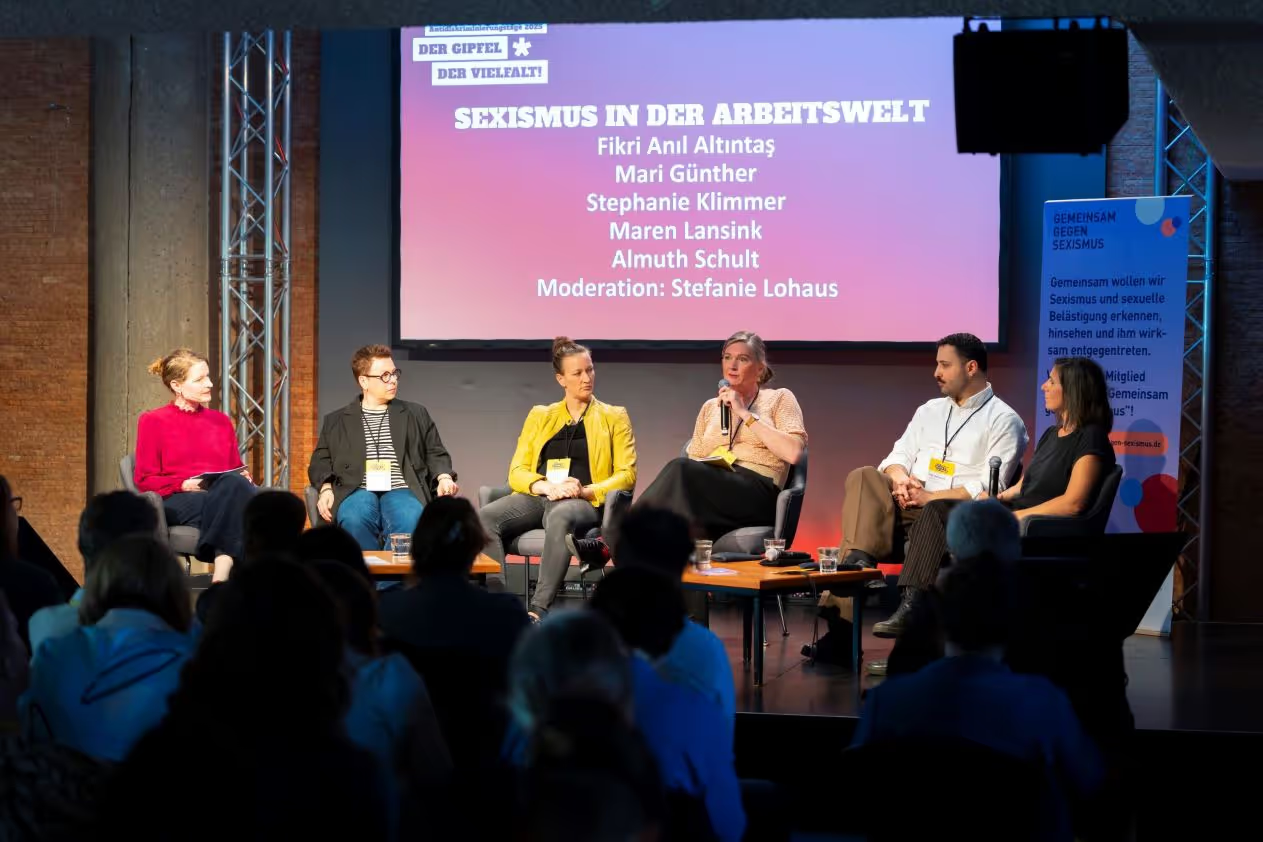
The discussion was moderated by Stefanie Lohaus, member of the EAF Berlin executive board and project manager of the "Together Against Sexism" alliance. It brought together five perspectives from practice, consulting, media, skilled trades, sports, and activism through an engaging panel:
- Fikri Anıl Altıntaş – freelance author based in Berlin and volunteer #HeForShe ambassador for UN Women Germany
- Mari Günther – specialist consultant for counseling and healthcare at the Federal Association for Trans* (BVT*) and systemic therapist
- Stephanie Klimmer – project manager of the "Competence Center for Berlin Skilled Trades" at bfw (Company for Education)
- Almuth Schult – German football player (goalkeeper) and Olympic champion, long-time number-one goalkeeper for the women's national team
- Maren Lansink, Managing Director of the Themis Trust Center against Sexual Harassment and Violence
Everyday sexism – and why it often goes unnamed
It became clear right from the start: sexism is not a fringe phenomenon. It begins with supposedly "harmless" remarks, manifests in structural disadvantage, and can escalate into abusive behavior. Furthermore, it does not affect everyone in the same way.
Stefanie Klimmer shared insights from the skilled trades, describing how young women, trans, and non-binary individuals are frequently subjected to subtle exclusion—for instance, by having their technical competence questioned or being confronted with sexist comments from colleagues and customers, often without support from supervisors. Fikri Anıl Altıntaş explained the icebreakers needed to ensure boys and men don't immediately dismiss the topic of sexism. Almuth Schult described the forms of sexism and exclusion women face in sports. Mari Günther highlighted how closely sexism and transphobia are often intertwined—such as when trans people are systematically excluded through language, structures, or erasure, even within equality initiatives that often focus solely on cis women.
Harassment is not a misunderstanding—it is an abuse of power
The second part of the discussion focused on how organizations handle sexual harassment—and what victims truly need.
Maren Lansink explained that many victims still do not come forward at all for fear of negative consequences. When they do, they often encounter procedures that are not confidential, not fair, or simply non-existent. Success in counseling does not necessarily mean that a case becomes public – but rather that those affected feel empowered and regain their agency.
However, there are also positive examples, and the work of the Themis trust center has already achieved a great deal. Fikri Anıl Altıntaş underscored how important it is for men to actively take responsibility – as co-responsible parties in a professional world shaped by power imbalances.
What makes change possible – better structures against sexism in the workplace
Change requires more than just appeals – this became clear in the third part of the discussion. Stefanie Klimmer reported on successful empowerment formats in the skilled trades. Unfortunately, there are still too few companies that take the issue seriously at a structural level. As a result, FLINTA individuals are often left with no choice but to become self-employed – or they feel forced to give up their profession entirely.
Mari Günther cited positive examples of successful trans inclusion in everyday work life – such as through clear communication rules, inclusive language, and training sessions conducted by trans speakers. Fikri Anıl Altıntaş emphasized the effectiveness of protected spaces for men to talk openly about questions of privilege, boundary violations, and being an ally. He also raised awareness of the need to look at society as a whole. Almuth Schult highlighted the importance of role models – and the momentum that can be created in football when individual leaders in associations or clubs are willing to take responsibility.
Maren Lansink warned: Prevention and counseling require resources – and must not depend on the commitment of individuals.
Equality under pressure – and the long road to change
In the final topic block, it became clear: Equality is currently not a given. Mari Günther warned of the influence of right-wing discourse on the working reality of trans people – and that the clock could be turned back.
Maren Lansink added that the social rollback could also manifest in the funding of prevention work – for instance, when proven structures like the Themis trust center have to fight for their future. Fikri Anıl Altıntaş reported on how strongly young people in particular are influenced by the so-called "manosphere." Almuth Schult shared how much society has changed for the better regarding women in football – and encouraged the audience to persevere through any potential dry spells: progress cannot be stopped.
The panel demonstrated impressively: Sexism is not just an individual problem, but an expression of unequal power relations. Yet it also became clear: There are experiences, solutions, networks, and approaches that work – best when everyone involved is willing to take responsibility.