Into Politics with Children - Good Practices for Balancing Family, Career, and Local Political Volunteer Work
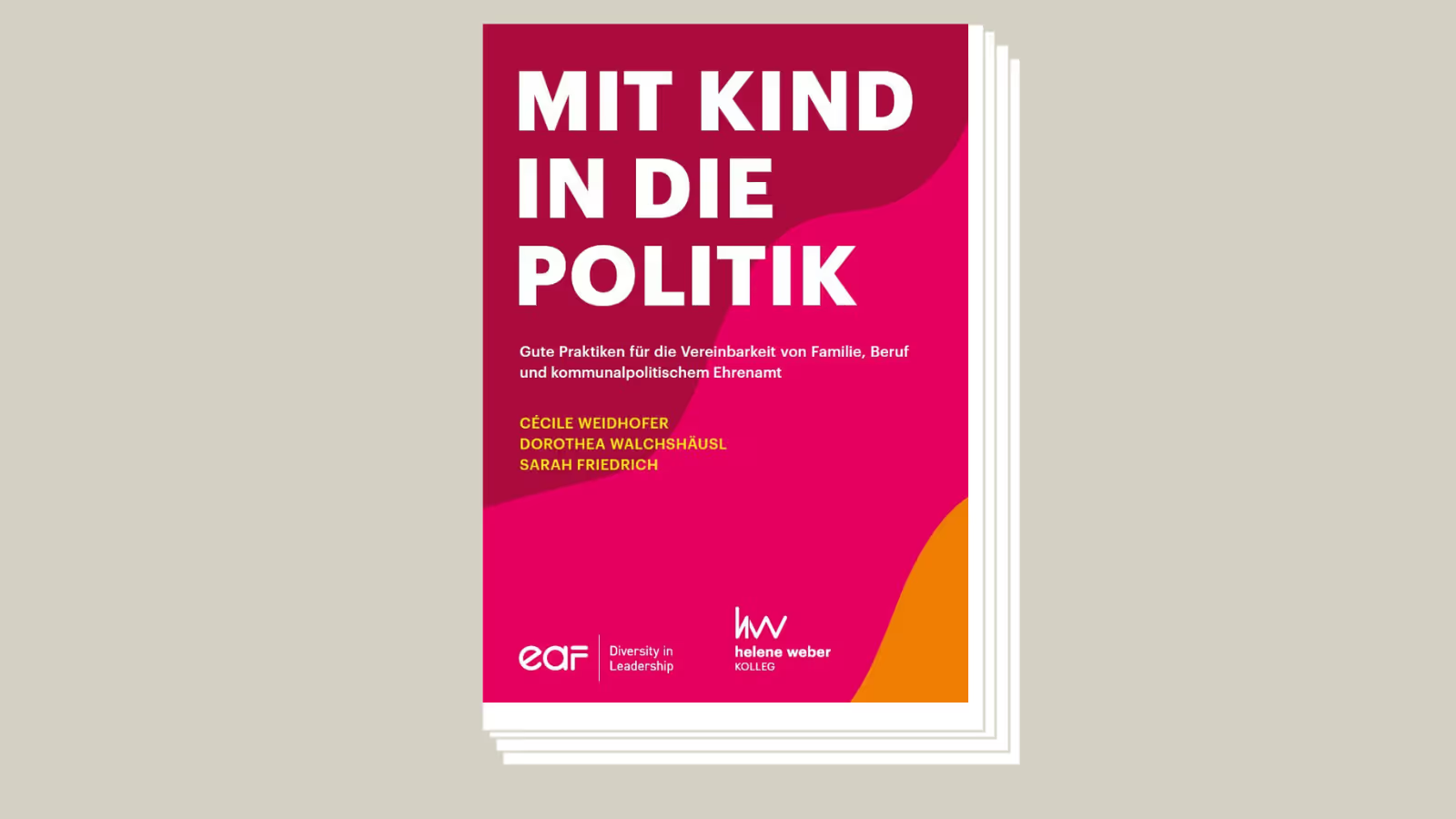
Local councils and town halls remain a male-dominated domain: women make up only 27.7 percent of local representatives, and only 9.5 percent of district administrators in Germany are women. More than 90 percent of town halls are led by men. Elected officials raising families are particularly underrepresented in local politics. The reasons for this are numerous, as are the solutions. The study "Into Politics with Children" uses many examples, interviews, and profiles to show what structural changes can be initiated in municipalities to make local politics more family-friendly and thus more diverse. It contains concrete steps and recommendations for action for policymakers, administrations, and associations. The study was authored by EAF Berlin and funded by the Federal Ministry for Women as part of the Helene Weber College.
A Lack of Flexibility in Local Politics
"One of the main reasons why so few women are involved in local politics is the difficulty of balancing family, career, and volunteer work," says study author and head of the Helene Weber College, Cécile Weidhofer of EAF Berlin. "The high time commitment required for the office, combined with low financial compensation, high expectations—especially for young female politicians or those with family obligations—and family-unfriendly meeting times are just a few of the explanations." Those who do take the step often give up their mandate quickly because the additional burden associated with political engagement is barely manageable. The authors demonstrate that change is possible. The study can support municipalities, parties, and voter groups in addressing how to achieve more family-friendly policies within their own local councils, and it bundles recommendations, actions, and tips that can be implemented immediately.
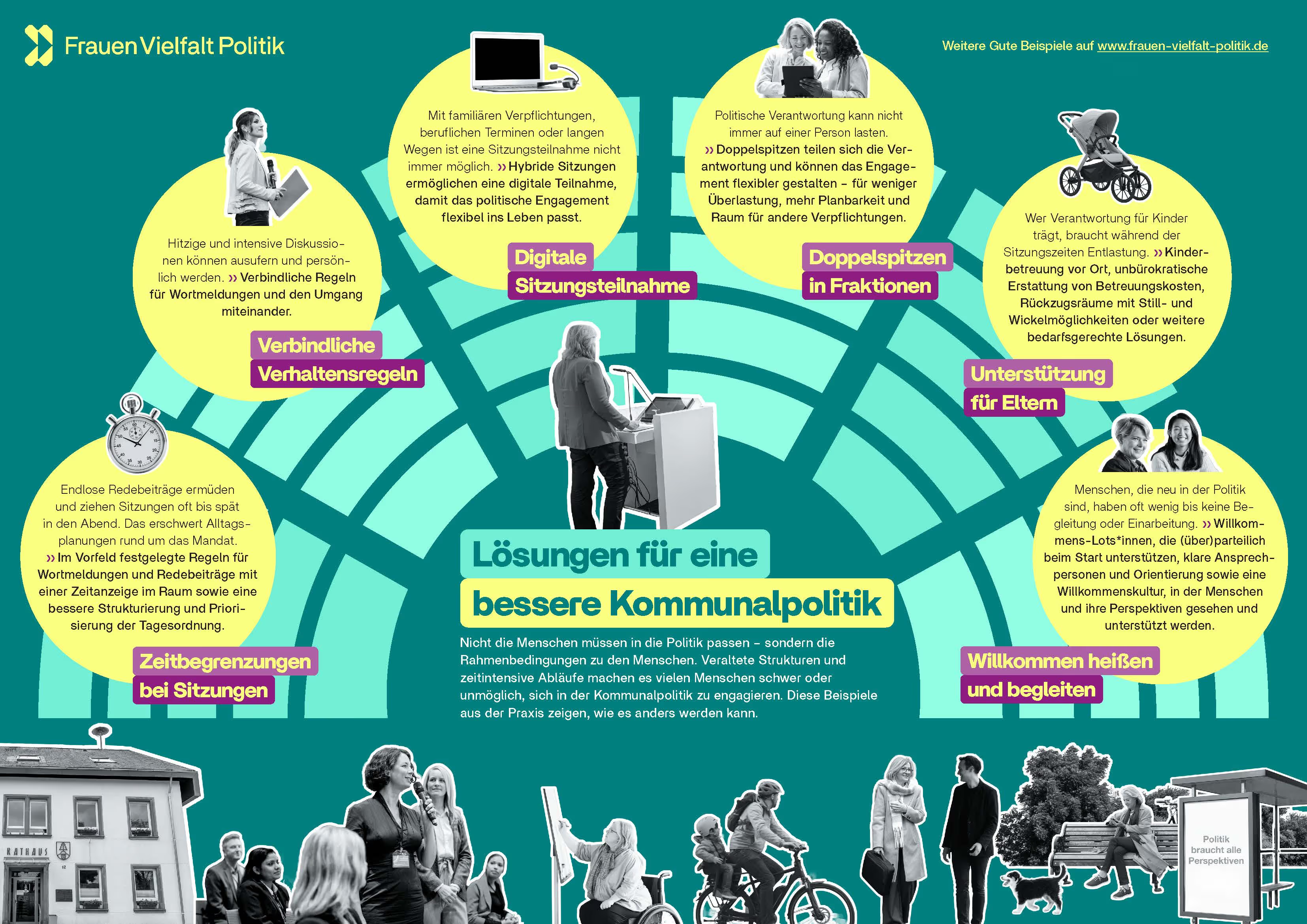
Childcare, Flexible Meeting Times, Digitalization: How It Can Be Done
For instance, municipalities can establish childcare arrangements and equip buildings to be family-friendly so that children can be brought along. In Sehnde (Lower Saxony), for example, babysitters are matched with parents. Halle an der Saale has collaborated with municipal daycare centers. Streamlining committee and council meetings can also make participation easier for those with family obligations. Digitalization also plays a significant role here. Online—or more precisely, hybrid—council meetings proved their worth during the COVID-19 pandemic and must be maintained in the future to improve work-life balance. Networks of elected officials facilitate the exchange of experience and knowledge, empower their members, and support their ability to influence policy. In Münster, Hesse (Darmstadt-Dieburg district), for example, members of the general parents' council established in 2022 have found that their opinions are seen and heard. This shows that there are opportunities for participation and influence at the local level even without holding a mandate.
Family-Friendly Structures Can Only Be Developed Together
Local politics will only become more family-friendly if all stakeholders work together. In addition to local elected officials, members of state and federal parliaments, political parties, voter groups, local administrations, and municipal associations must also examine their own practices, set goals, and develop modern strategies to promote the balance between family, career, and local volunteer work, both internally and externally. Exchanging experiences with one another remains essential. Therefore, the study is intended as a starting point: "Our findings can only be the beginning. We invite municipalities and local political actors to share their experiences and success stories with us and others," emphasizes Cécile Weidhofer. "We want our study and the exchange of experiences to offer concrete assistance." Best practice examples and the experiences of role-model politicians are also continuously published on the website www.frauen-macht-politik.de.
Download the study
Weidhofer, Cécile; Walchshäusl, Dorothea; Friedrich, Sarah (2023): Into Politics with Children. Good Practices for Balancing Family, Career, and Local Political Volunteer Work