Barriers for women in politics remain significant

The empirical study, which includes recommendations for the political parties, was conducted in collaboration with the Allensbach Institute.
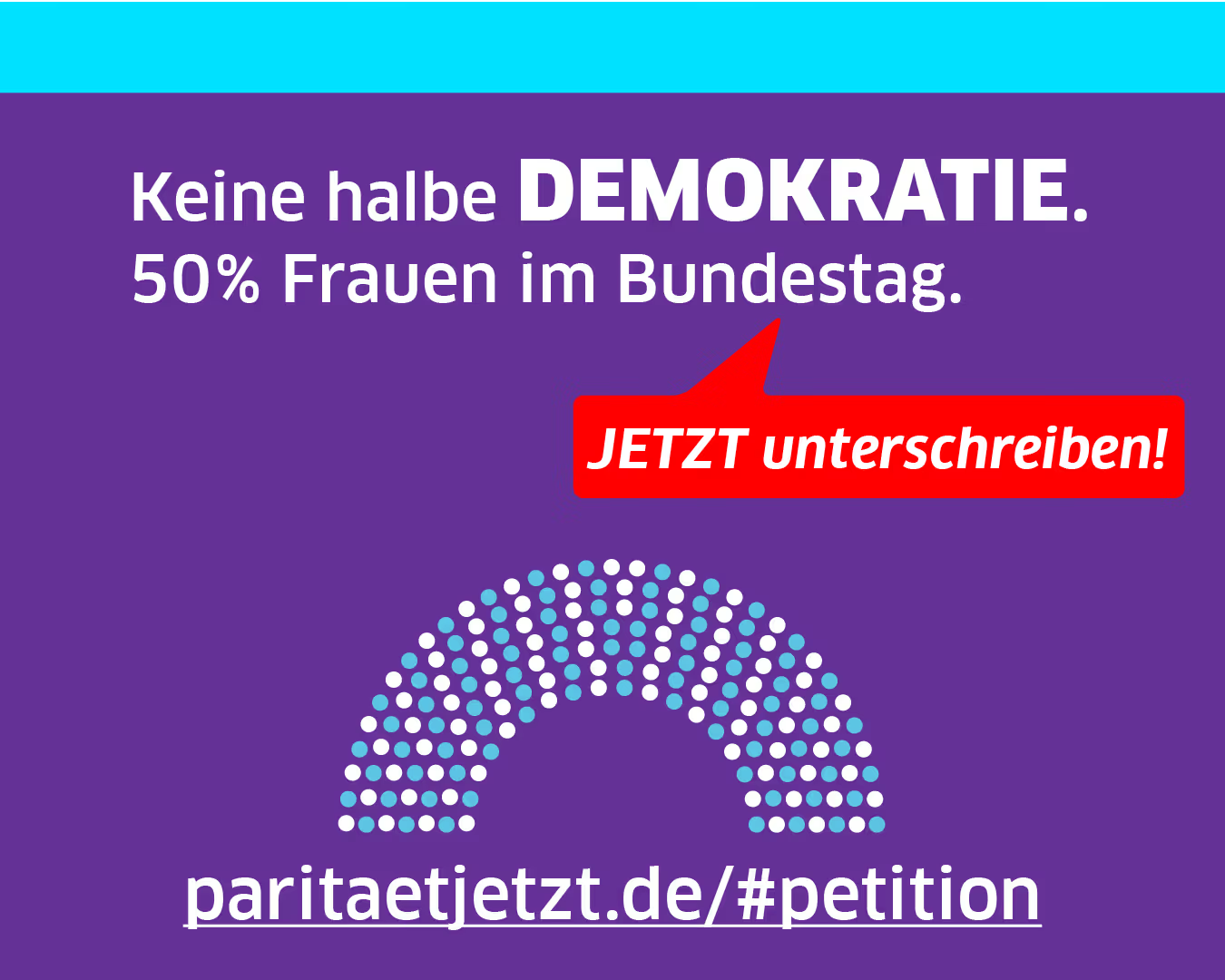
Germany has never had a parliament that was even close to being gender-balanced: while the proportion of women in the 20th Bundestag rose by three percentage points to 34.7 percent, it remains below the previous record of 37.1 percent set in 2013. Furthermore, there are still significantly more male than female members within the political parties.
What are the root causes, and how could the situation be changed?
Answers are provided by a representative survey of more than 800 politicians from federal, state, and local levels across the six parties represented in the Bundestag. It empirically documents the hurdles faced by women involved in party politics.
Key findings:
- 65 percent of female politicians believe that different expectations are placed on them compared to their male counterparts, for example regarding their behavior, performance, or appearance.
- 66 percent of women believe that the nature of political discourse deters women; nearly half of the female politicians surveyed state that their contributions and comments are taken less seriously.
- Sexual harassment, in the form of unwanted and inappropriate remarks, looks, or physical contact, also occurs: according to our study, 40 percent of all female politicians surveyed—and 60 percent of those under 45—have experienced sexual harassment in the course of their political work.
- There is a discrepancy in how female and male politicians perceive issues of equal opportunity. Women tend to view this as a greater problem, while men are more likely to believe that women and men already have equal opportunities.
Further key areas include
- Positive and negative experiences
- Network culture
- Attacks on social media
- Party climate: Rumors and discrediting
- Status of equal opportunity
- Practical recommendations for political parties
The survey was supplemented by qualitative interviews and, based on this comprehensive empirical foundation, is the first study of its kind in Germany.
It was designed and conducted by EAF Berlin; for the quantitative survey, EAF Berlin collaborated with the Allensbach Institute for Public Opinion Research. The study was funded by the Federal Ministry for Family Affairs, Senior Citizens, Women and Youth.
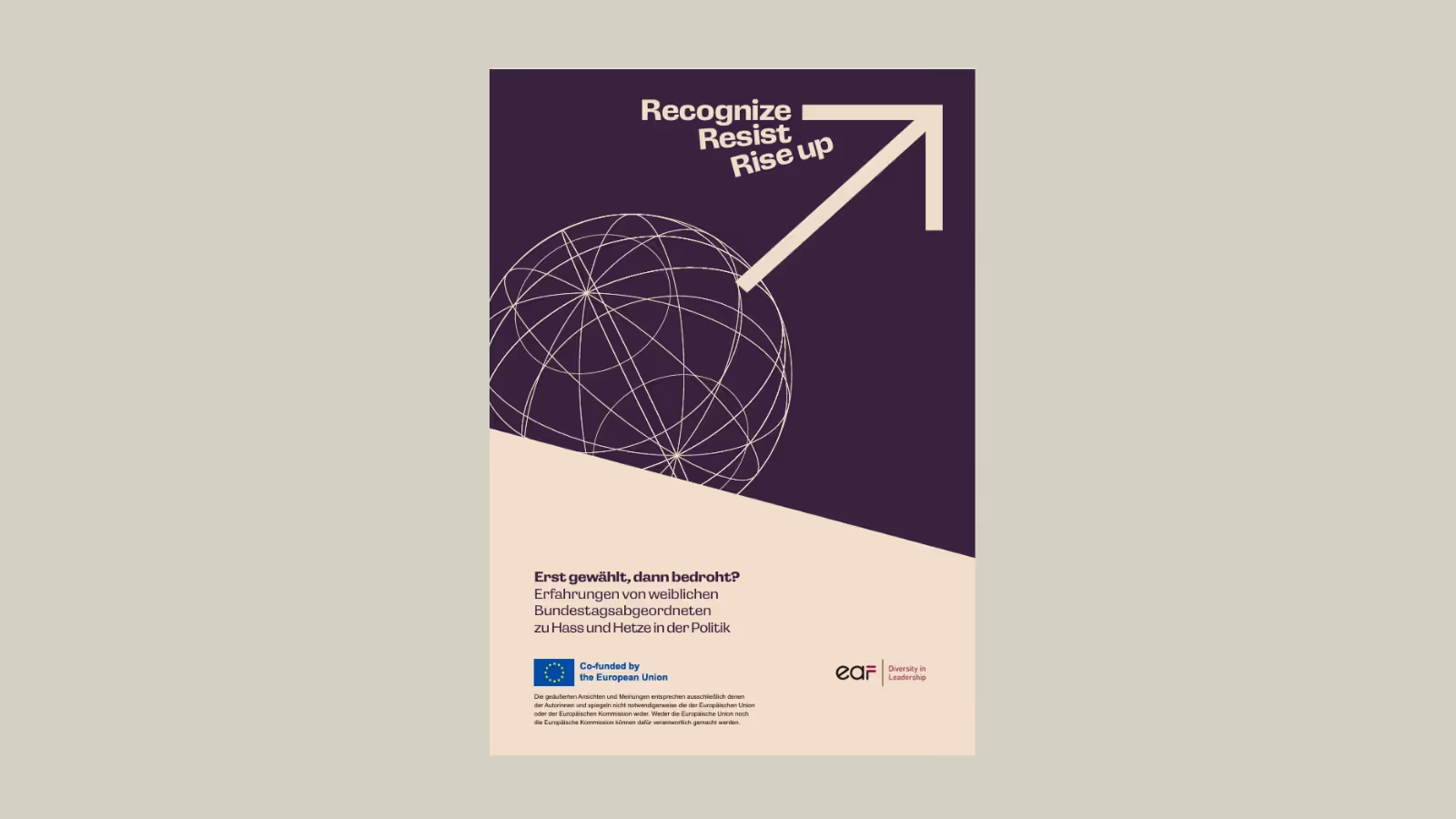
You can find the study available for download here.