Gender-specific analysis
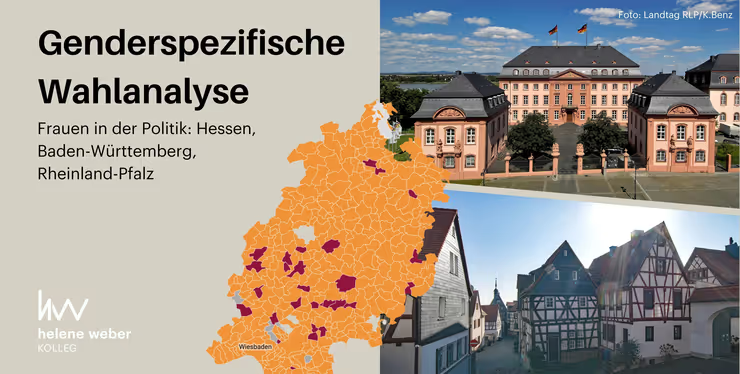
The 2021 super election year began on March 14, with municipal elections in Hesse and state parliamentary elections in Rhineland-Palatinate and Baden-Württemberg. As part of the Helene Weber Kolleg, we took a gender-focused look at the newly elected parliaments and top positions and analyzed the election results accordingly.
We compared data from the last elections in 2016 with the current results. The analyses show that women remain significantly underrepresented in politics, and in some cases, their representation has even declined.
The proportion of women in the state parliament of Rhineland-Palatinate fell from 33.6 to 32.3 percent, with a total of 32 women elected. Of all the parties represented in the state parliament, only the Greens achieved gender parity, with a ratio of five women to five men.
The results of the state election in Baden-Württembergare similarly sobering: although the proportion of women rose from 26.6 to 29.2 percent, it remains below the national average of approximately 31.3 percent. Here, too, the Greens have the highest share of female representatives at 50 percent, placing them well ahead of the other parties. With 45.7 percent, they also had the highest proportion of female candidates. The average in Baden-Württemberg was 26.7 percent, meaning far more men than women were nominated.
In Hesse , the municipal elections saw the selection of district councils, city councils, municipal assemblies, and local advisory boards. In addition, new mayors were elected in 36 of 422 cities. Here, too, the elections have changed nothing; local politics remains male-dominated. The proportion of female mayors in Hesse is 7.6 percent—meaning only 32 out of 415 town halls are led by a woman. This keeps Hesse below the national average of 9 percent. A sobering result, even though it represents a 1.2 percentage point improvement over the previous legislative period.
Monitoring the elections in Hesse, Baden-Württemberg, and Rhineland-Palatinate shows that the political representation of women and men and their participation in political leadership positions remain unequally distributed. Strategic approaches are necessary to prevent regression and ensure effective progress.
Detailed analyses and charts regarding the elections can be found here.
About the Helene Weber-Kolleg
"More women in parliament!" – that is the goal of the Helene Weber-Kolleg (HWK). Whether in the Bundestag, state parliaments, or city and district councils, women remain underrepresented. The HWK is helping to change that. Its offerings include empowerment programs, mentoring, and networking and training formats. The HWK is funded by the Federal Ministry for Family Affairs, Senior Citizens, Women and Youth, and the project is managed by EAF Berlin.
You can find the Helene Weber Kolleg website here.