FES policy brief: Time for a decisive equality policy!
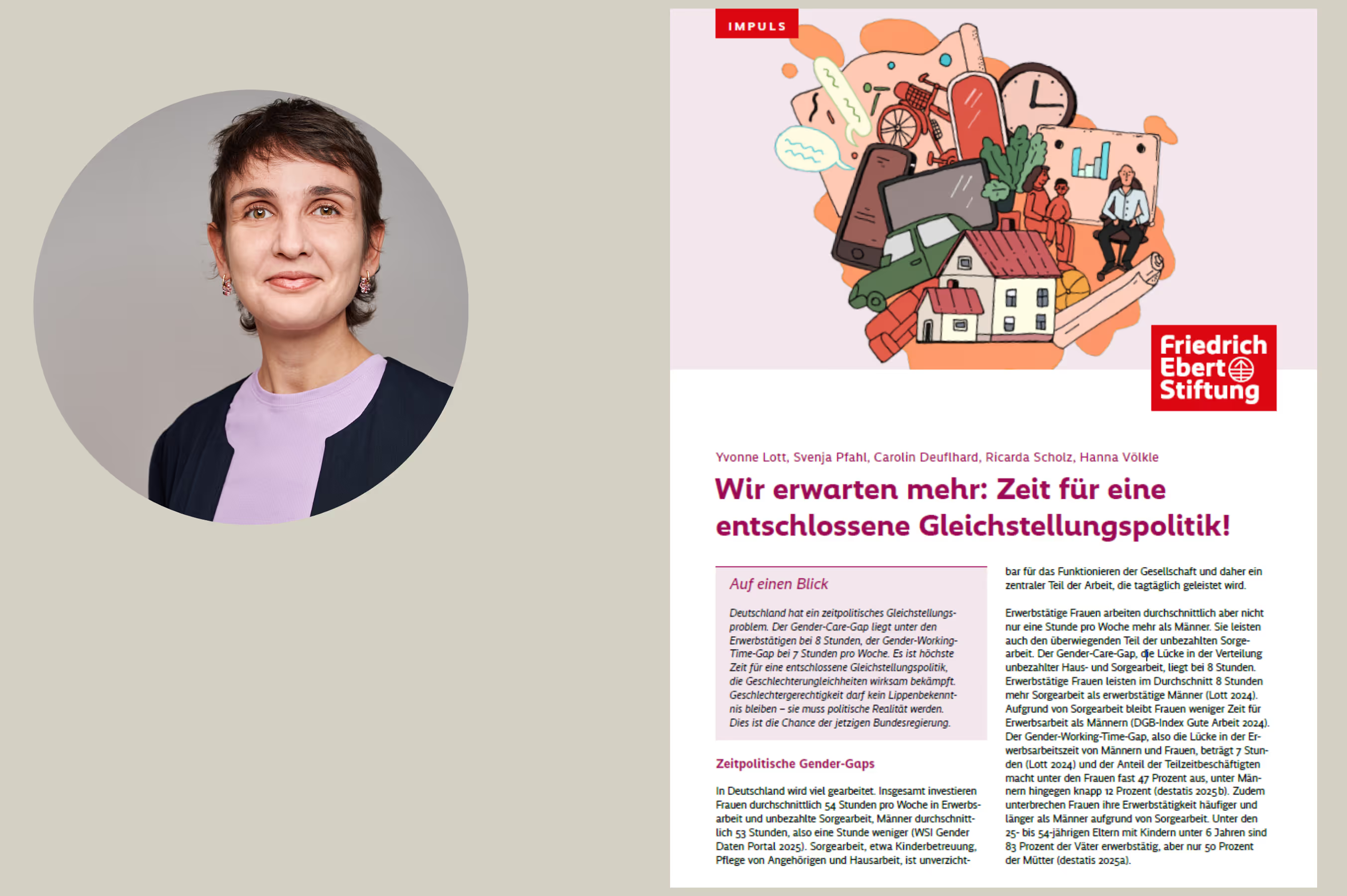
The debate on working hours is in full swing – and it is a controversial one. Planned reforms promise a better work-life balance. But the fact is: Germany has a structural gender equality problem regarding time. Employed women perform 8 hours more unpaid care work per week than men. At the same time, they work 7 hours less in paid employment.
The policy brief "We expect more: Time for a decisive equality policy!" by Yvonne Lott, Svenja Pfahl, Carolin Deuflhard, Ricarda Scholz, and EAF Senior Expert Hanna Völkle shows: There is no evidence of a direct link between longer working hours and greater prosperity – quite the opposite. Excessive working hours jeopardize productivity and health. What is intended as a measure to improve work-life balance can have the opposite effect.
What is needed instead is a decisive equality policy that effectively combats gender inequality. The paper is an initiative of the "Fair Times" network of the Friedrich-Ebert-Stiftung. EAF Senior Expert Hanna Völkle is a member of the "Fair Times" network and contributed to the current FES policy brief as an expert in feminist time policy.
Download
Click here for the policy brief
Digital lunch talk on the working hours debate
Discuss the paper, its key findings, and recommendations for action with the authors, Teresa Bücker and Bettina Kohlrausch – in a compact session during your lunch break on October 9 from 12:30 to 1:15 PM via Zoom.
To register: https://www.fes.de/veranstaltungen/veranstaltungsdetail/285607
About the "Fair Times" network
The publication was developed by a group of authors from the "Fair Times" network of the Friedrich-Ebert-Stiftung. The network serves as a platform for the exchange and development of gender-equitable (working) time policy. The network brings together experts from academia, civil society, and trade unions, aiming to provide progressive impetus to the socio-political debate.