"The new Alliance strengthens our position"
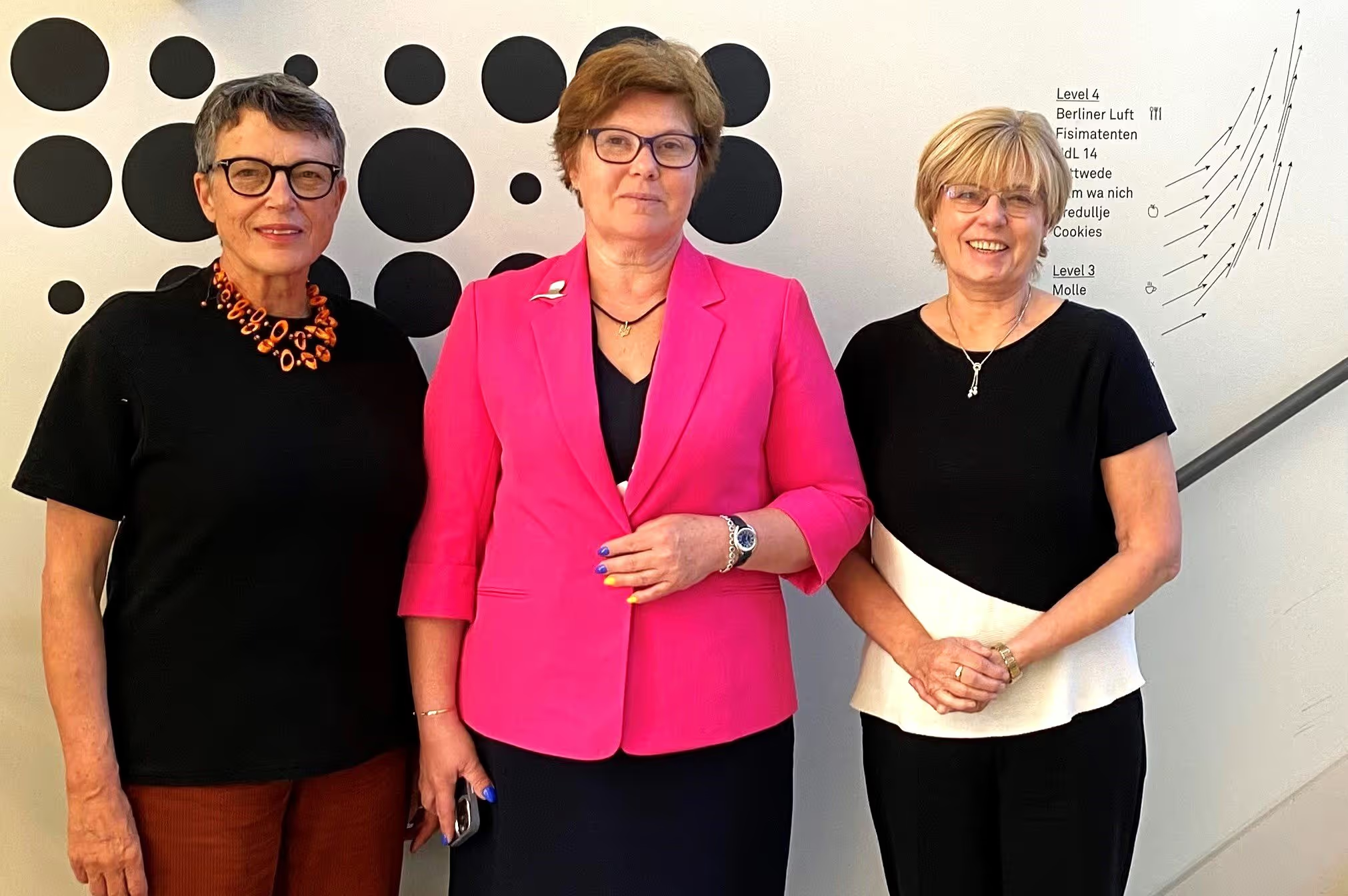
Ms. Levchenko, was the recovery conference in Berlin worth it for you?
Absolutely. It was my first time attending a conference of this kind, and I am impressed by the professional organization. I am also pleased that the topic of gender-responsive recovery for Ukraine was given a central place rather than being relegated to side events. This is a major step forward since Lugano, where the first of these conferences took place in 2022. While gender equality was already called for as a principle for Ukraine's recovery there, and the Platform for Gender Mainstreaming and Inclusion along with an advisory board of civil society women's organizations were launched in London in 2023, it was only through our combined efforts to insist that a gender perspective must be an essential part of the recovery that we were able to announce the launch of the "Alliance for Gender-responsive and inclusive Recovery" with such high-profile support at the URC in Berlin.
Who is behind this Alliance?
The initiative originally came from the Ukrainian government. It quickly found prominent advocates, such as Hillary Clinton, Mary Robinson—the former UN High Commissioner for Human Rights and President of Ireland—and Melanne Verveer, the former US Ambassador-at-Large for Global Women's Issues. They were joined by strong supporters within the German federal government and UN Women. The idea was put into practice under the leadership of Federal Minister Svenja Schulze and Ukraine’s Deputy Prime Minister for European and Euro-Atlantic Integration, Olga Stefanishina. In addition to myself, other international and civil society organizations were involved. We utilized international stages like the 68th session of the UN Commission on the Status of Women (CSW) and the UN Human Rights Council to advance our cause. Currently, the Alliance includes 15 governments, major international donors, UN agencies, civil society organizations, and the private sector.
Impressive. And what goals has the Alliance set for itself?
The goal is to provide financial and technical support for projects that advance gender equality and protect women and girls, as well as for women-led and feminist NGOs. Another primary objective is to ensure that all budgets and resources for recovery are analyzed through a gender lens and distributed accordingly. This allocation process can be monitored, for example, with the help of the DAC gender equality policy marker of the OECD.
Is the Alliance planning to make 46 million euros available for this in the first round?
Yes, that was announced at the conference. The new Alliance certainly strengthens our position as the Ukrainian government in further international negotiations. It serves as a platform for everyone committed to promoting women in leadership positions and advancing equality. The prerequisite, of course, is that the goals the Alliance has set are actually implemented. We expect accountability regarding progress to be provided, for instance, at the next CSW in New York in 2025.
The URC in Berlin focused primarily on the economic aspects of recovery, including from a gender perspective. Less attention was paid to women's participation in political design and decision-making processes. For the EAF, the political empowerment of women is a core task—including in our German-Ukrainian cooperation projects "Together for Democracy" and "She can." How relevant is this topic for you?
I consider such cooperation projects to promote women in leadership positions—at all levels and in all sectors—to be extremely necessary. The EAF should therefore definitely continue these projects with your Ukrainian partners and initiate a dialogue about them with your government. As the Government Commissioner for Gender Equality Policy, I would be happy to become part of this initiative. The Alliance's funds can also be used for this purpose.
Will female civil society in Ukraine be strong enough to prevent a re-traditionalization of gender roles after the war?
That remains to be seen. The fact is that civil society in Ukraine is strong and exerts significant influence on political institutions. There is effective communication between these two spheres. My own roots are in civil society.
Dr. Kateryna Levchenko, a legal scholar with a doctorate, is the Government Commissioner for Gender Equality Policy of Ukraine. She has been active in women's rights organizations for many years and is, among other things, a founder and member of the human rights organization La Strada-Ukraine, established in 1997.