Ten model regions promote gender equality in local politics
At just 28 percent on average, women remain significantly underrepresented in local politics. The Municipal Action Program, run by EAF Berlin and the German Rural Women's Association (Deutscher LandFrauenverband), aims to increase this share sustainably. Following an initial round, ten additional model regions have been selected to receive support over the next 18 months through funding and networking activities, a non-partisan and supra-regional mentoring program, consulting services, networking meetings, and public relations work. The project is funded by the Federal Ministry for Gender Equality.
With a national average of only 28 percent, women are still significantly underrepresented in local representative bodies. The share of female district administrators is just 9.5 percent, and only one in ten town halls is led by a female mayor. "The reasons for the low proportion of women in local politics are manifold. There is also a lack of role models and support for women. This commitment will help to strengthen awareness of gender equality in politics and encourage other regions to launch similar initiatives," says Dr. Helga Lukoschat, Chair of the EAF Board and member of the selection jury. "We look forward to supporting these regions in implementing their plans and much more over the coming 18 months."
Second round: Ten regions from across Germany
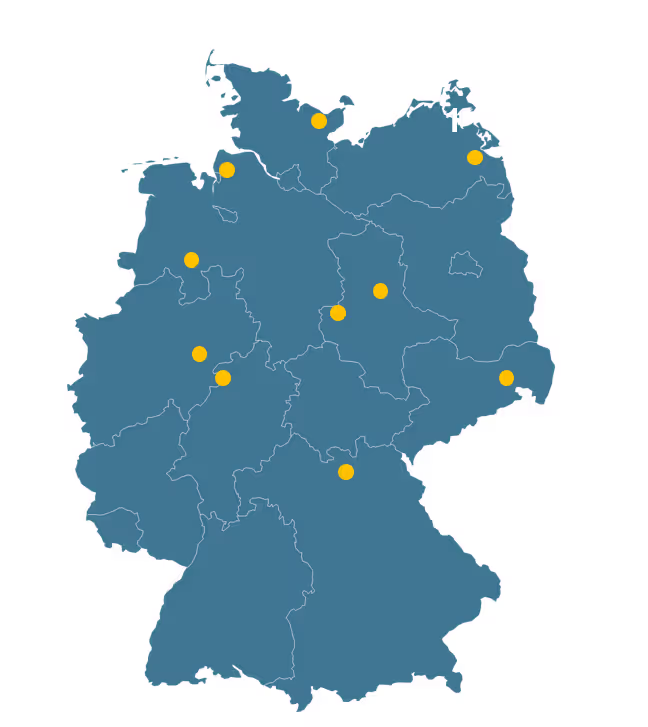
On April 19, 2023, an independent and expert jury, chaired by the Federal Ministry for Gender Equality, selected the ten regions for the second cycle of the program:
- Ostholstein District, Schleswig-Holstein
- Vorpommern-Greifswald District, Mecklenburg-Western Pomerania
- Sächsische Schweiz-Osterzgebirge, Meißen, and Mittelsachsen Districts, Saxony
- Schweinfurt District, Bavaria
- Harz District, Saxony-Anhalt
- Jerichower Land and Börde Districts, and the City of Dessau-Roßlau, Saxony-Anhalt
- Waldeck-Frankenberg District, Hesse
- Hochsauerland District, North Rhine-Westphalia
- Cloppenburg and Vechta Districts, Lower Saxony
- Three joint municipalities in the Hadeln region, Lower Saxony
"The first round of the action program showed how urgently we need to create a favorable environment in local politics to make political engagement more attractive for women. I am pleased to now bring the experience from the first cycle into the new regions and to continue advancing gender diversity in politics together with strong project partners and committed women," emphasizes Petra Bentkämper, President of the dlv.
Creating structures for modern local politics – concrete and on-site
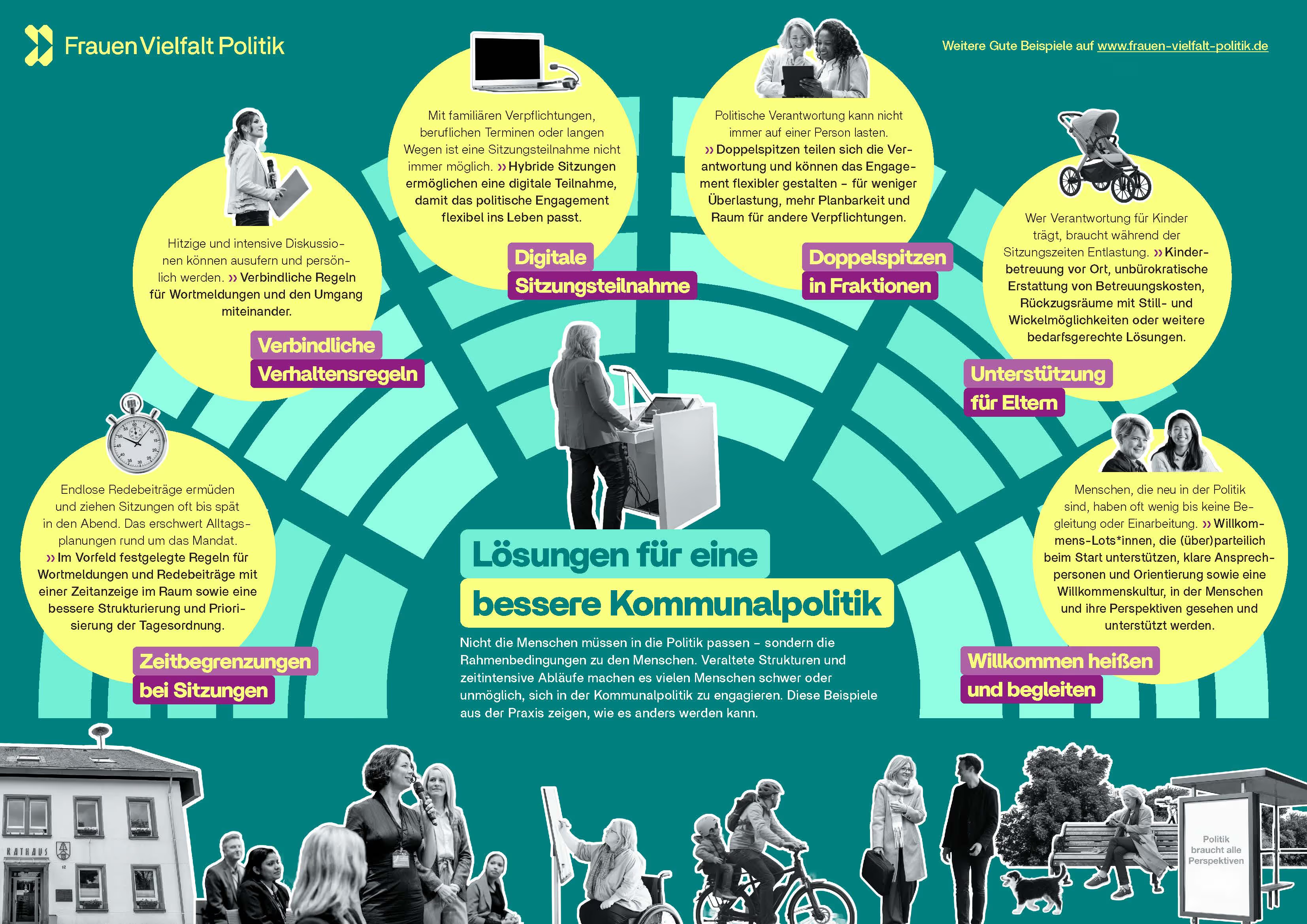
The action program "Municipality – Women into Politics!" combines empowerment, motivation, and needs-based support for interested candidates and currently active female politicians, for example through a mentoring program, workshops, or training sessions. The program aims not only to increase the number of women in these positions and in city, municipal, and district councils, but also to initiate structural changes that have a positive impact on women's participation, as well as the acceptance and attractiveness of local politics. For instance, meeting times are reviewed and adjusted to accommodate the needs of parents, caregivers, and working professionals, such as by introducing speaking time limits or pre-set end times for meetings.
A key focus is on rural regions. The EAF Berlin and the German LandFrauen Association provide continuous advice, guidance, and support to the regions in implementing their activities. The participating regions receive a financial grant of €5,000 for these measures.
Regional engagement and nationwide networking
The selected regions benefit from the following support and networking activities:
- Regional consulting to improve framework conditions (e.g., meeting culture and scheduling, balancing local political office with family/private life and career, prevention of harassment/everyday sexism);
- Nationwide mentoring and qualification opportunities for interested women, candidates, and officeholders via a digital mentoring platform with regional support and exchange formats;
- Workshop discussions for interested women, candidates, and officeholders aimed at exchange, qualification, and networking;
- Networking and professional development opportunities specifically for female mayors;
- Kick-off and networking meetings for participating regions;
- Nationwide public relations.
The first cycle began in January 2022 and runs until the end of May 2023; the second cycle starts in June 2023 and runs until the end of 2024.
Visible Successes
During the first cycle of the program, 154 mentoring pairs, as well as local politicians, equal opportunity officers, and numerous interested parties, participated in nationwide networking and specialist events. Topics covered included balancing professional, family/private life with local political volunteer work, digital civil courage against online hate, everyday sexism, and gender-specific behavioral patterns and their reflection in the exercise of power.
Successes are already visible: the first participants in the mentoring program are joining political parties or even running for office. Women in politics are becoming more visible in the regions, and awareness of the need for a framework that supports attractive and modern local politics is growing.
The program is funded by the Federal Ministry for Family Affairs, Senior Citizens, Women and Youth (BMFSFJ) and implemented by EAF Berlin in cooperation with the German Rural Women's Association (dlv). The three leading municipal associations – the German County Association, the German Association of Towns and Municipalities, and the Association of German Cities – as well as the Federal Association of Municipal Women's and Equal Opportunity Offices, provide their support.