
"Lugano gave me hope"

.jpg)
The conference took place from July 4 to 5, 2022, in Lugano, Switzerland.
Liliya, how did you end up in Lugano?
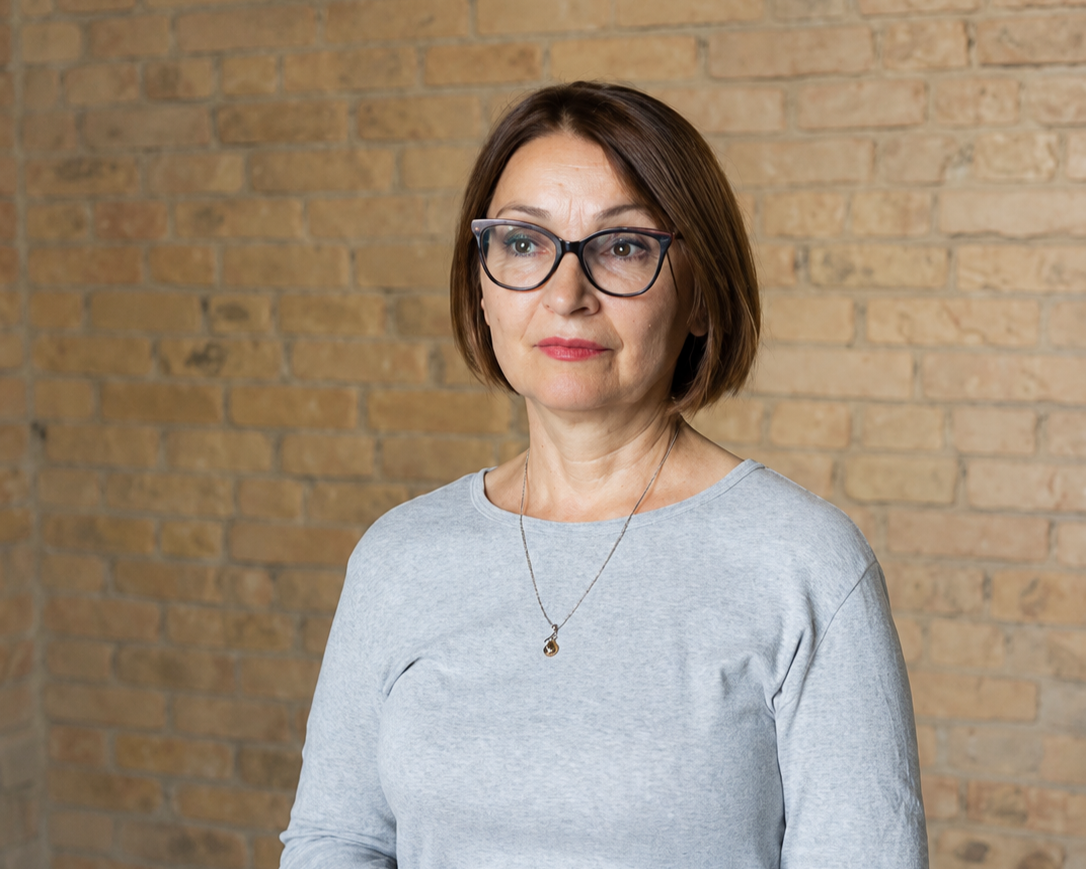
I was part of a five-woman delegation representing various Ukrainian NGOs. We were supported by the Ukrainian Women's Fund and the Canadian government. I was invited in my capacity as chair of the women's organization Smarta. When I received the invitation, I wasn't sure if I should go at all, because there is a war here and I wanted to stay. But because Lugansk and Lugano sound so similar, I took it as a sign that I should attend. At the time, there was fighting in the Ukrainian city of Lugansk, while in Lugano, Switzerland, they were discussing our post-war future. I felt so proud of Ukraine, yet at the same time so sad and angry about the situation in the Donbas.
What do you consider the most important points of the seven "Lugano Principles" adopted at the conference?
All the principles are equally important. However, as a member of the Ukrainian women's movement, I particularly support the sixth principle: "Gender equality and inclusion." It states that recovery should be inclusive and take into account both gender equality and human rights, including economic, social, and cultural rights. Recovery should benefit everyone and leave no one behind. Inequalities must be reduced. It is a principle that should permeate all the others.
Representatives from 40 countries attended the conference. What was the estimated proportion of women there?
I couldn't count them, but it was significantly less than half—maybe a third. There were also very few women in the Ukrainian delegation.
Did you complain about that afterward?
No, because we still have very few women in government. But that will naturally change in the future.
Were there women from other countries among the key players?
Ursula von der Leyen was the opening speaker. I also remember a representative from the World Bank who advocated for financial support for Ukraine, arguing that the country would otherwise not be viable. There were other women in high-ranking positions from their respective countries among the speakers as well.
What impressed you most at the conference?
Before the main conference, there was an NGO forum at the University of Lugano, where it became clear what an important role civil society plays in the country's reconstruction. It was very important for me to hear those voices, not just those of the governments. There was so much information throughout the day and networking from morning until night.
I also remember Ukrainian Prime Minister Denys Shmyhal talking about the 750 billion US dollars needed for the country's reconstruction and suggesting that this money could be taken from the assets of Russian oligarchs. The Swiss President raised no objections but emphasized that this would only be possible if all laws were followed. In fact, the reconstruction could cost much more than currently estimated. A very important agreement was that the reconstruction of the country should begin immediately, not just after the war, because administration and the provision of services to the population must continue.
The online presentation by the Mayor of Mariupol, Vadym Boichenko, was particularly impressive. He spoke about the occupation, the dire situation in his city, and the initial efforts to rebuild it. Mariupol had already achieved a great deal between 2014 and 2022, but it currently lies in ruins. Yet, Boichenko is confident that the city can be rebuilt better than before.
However, I was most moved by the speech given by our President, Zelenskyy, at the opening of the conference. He didn't focus primarily on numbers and statistics, but spoke about values and human tragedies. The most important value he mentioned was the family and how it is now being torn apart by the war. As he spoke, I thought of my own family. I have a large family in Kramatorsk, now scattered everywhere—in different regions of the country and abroad. I also believe that family is the most important thing in life.
As an expert on UN Resolution 1325, "Women, Peace, and Security," how do you assess the conference? Did the resolution play a role there—on a practical or theoretical level? Were there any references to it?
No, the entire conference was exclusively about the reconstruction of Ukraine. However, immediately after returning from the conference, we met with other NGOs to work on the second phase of the current National Action Plan. It was introduced in 2020 and needs to be updated due to the war. The most important point in this regard is local implementation.
In your view, was Lugano worth it?
I am particularly proud that more than forty countries and twenty international organizations have signed a declaration in support of Ukraine. The world has finally listened to us and understood that Russia is the aggressor. Had they done so in 2014 and 2015, I believe there would be no war today.
The conference was a great opportunity to make new contacts for humanitarian aid for the victims in Ukraine. We want to establish a center for displaced persons in Lviv that will enable them to make a fresh start with international support. My organization, Smarta, is working on a project that helps women start their own businesses. "Lugano gave me hope," I wrote in a post later on.
Kontakt
Wenden Sie sich gerne an die zuständige Ansprechperson:

Weitere Einträge in unserem Blog

.png)


Subscribe
the EAF Berlin newsletter
Stay up to date

Would you like to actively implement diversity and equal opportunities in your organization?
There is no "off-the-shelf" consulting process. Therefore, all EAF Berlin's offerings are tailor-made and range from a single strategy workshop to a multi-year project. Our clients benefit from EAF Berlin's broad portfolio: