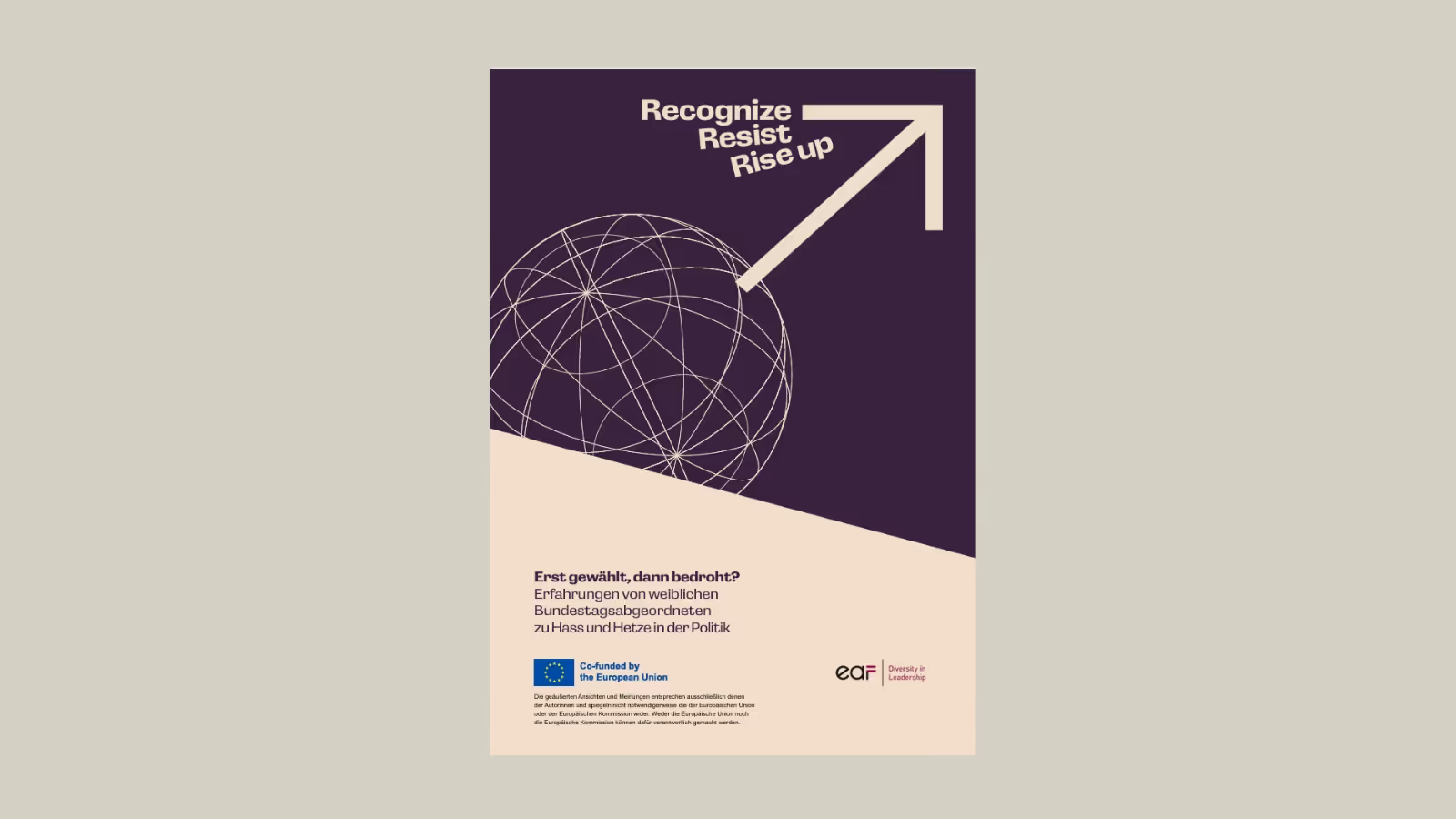
Comparative Report: Elected, Then Threatened?
.png)
Jetzt die PDF herunterladen.
The report synthesizes research findings from the national parliaments of five EU member states: Germany, Ireland, the Czech Republic, Hungary, and Slovakia. The focus is on violence against women in politics, internationally referred to as "Violence Against Women in Politics" (VAWiP). This encompasses not only physical attacks but also psychological and sexualized violence, hate speech and threats in the digital space, and economic disadvantage.
The publication examines these experiences across eight thematic areas. Among other things, it asks how violence influences political work, whether it leads to self-censorship, how those affected deal with incidents, and how existing protection mechanisms are evaluated. The findings are based on interviews and online surveys with female politicians from the five countries, supplemented in some cases by document and social media analyses. The research was conducted in 2025 and 2026 using a common research framework. In this way, the report highlights both cross-national patterns and differences between the national contexts.
For Germany, an important limitation must be noted: the survey of female members of the Bundestag was evaluated qualitatively because participation was lower than in the other project countries. Therefore, the results for Germany are not representative, but they do provide qualitative insights into the experiences of the participating politicians. These largely align with the representative results from the other countries. Through this comparison, the new publication establishes a foundation for better understanding the forms that violence against female politicians takes and what political institutions can do to strengthen the safety and equal political participation of women.
Sarah Robinson
Senior Expert
.jpg)
Cécile Weidhofer
Director
.jpg)