

Digital applications are not fair by default. This is how we can build more inclusive IT products.
What’s the Problem?
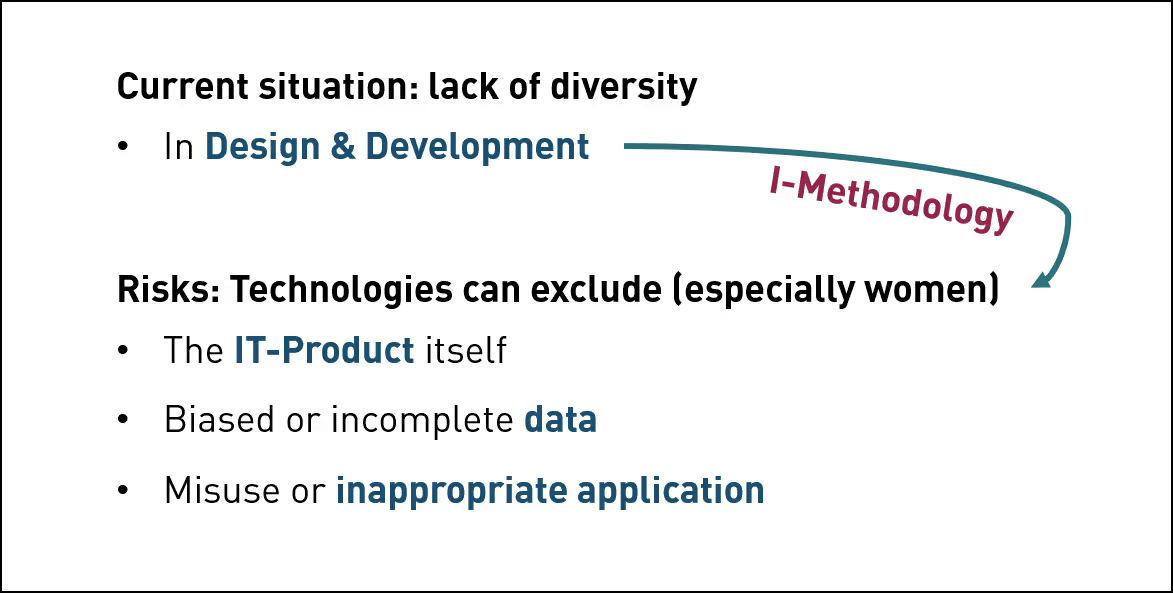
Digital applications are not inherently fair or equitable. Interfaces can be confusing, systems may assume technical knowledge that not everyone has, and products often fail to reflect the needs of all users. Images and wording can reinforce gender stereotypes. Algorithms can make biased decisions. Unfortunately, we see repeated examples of digital tools excluding people—often women, but also disadvantaged individuals due to characteristics such as skin colour, age, religion, or so-called migration background.
Why does IT become unfair?
There is no single reason for this. Sometimes unfair outcomes result from decisions made throughout the development process—especially when the needs of end users are not sufficiently understood or represented. In these cases, the system itself becomes unfair.
AI-based applications can produce biased results if the underlying data is distorted. Even a neutral technology can become unfair through inappropriate use—for instance, when an automated process is built on an already unequal model or when organizational conditions exclude certain groups.
These issues may arise from technical limitations or simple human error. Very often, however, unconscious stereotypes and assumptions held by those designing or deploying technology shape the outcome—without any intention to cause harm.
One explanation is the so-called “I-Methodology”: the tendency to design for oneself. We assume that others behave, think, and navigate the world the way we do. This can lead to products that work well for the developers but poorly for other users.
In addition, not everyone is equally represented in IT development. The tech sector remains heavily male-dominated. This lack of diversity helps explain why some digital solutions unintentionally disadvantage women.
How can digital products be developed and used in ways that reflect the diversity of all people?
On 8 July 2021, EAF senior expert Lisa Hanstein joined a hearing at the Munich City Council to discuss how gender equality can be integrated into the city’s digitalization strategy. In her keynote on “Gender-Equitable Digital Services in Practice,” she shared concrete methods, tools, and tips for organizations looking to design and implement more inclusive technologies.
Gender equality as a holistic task
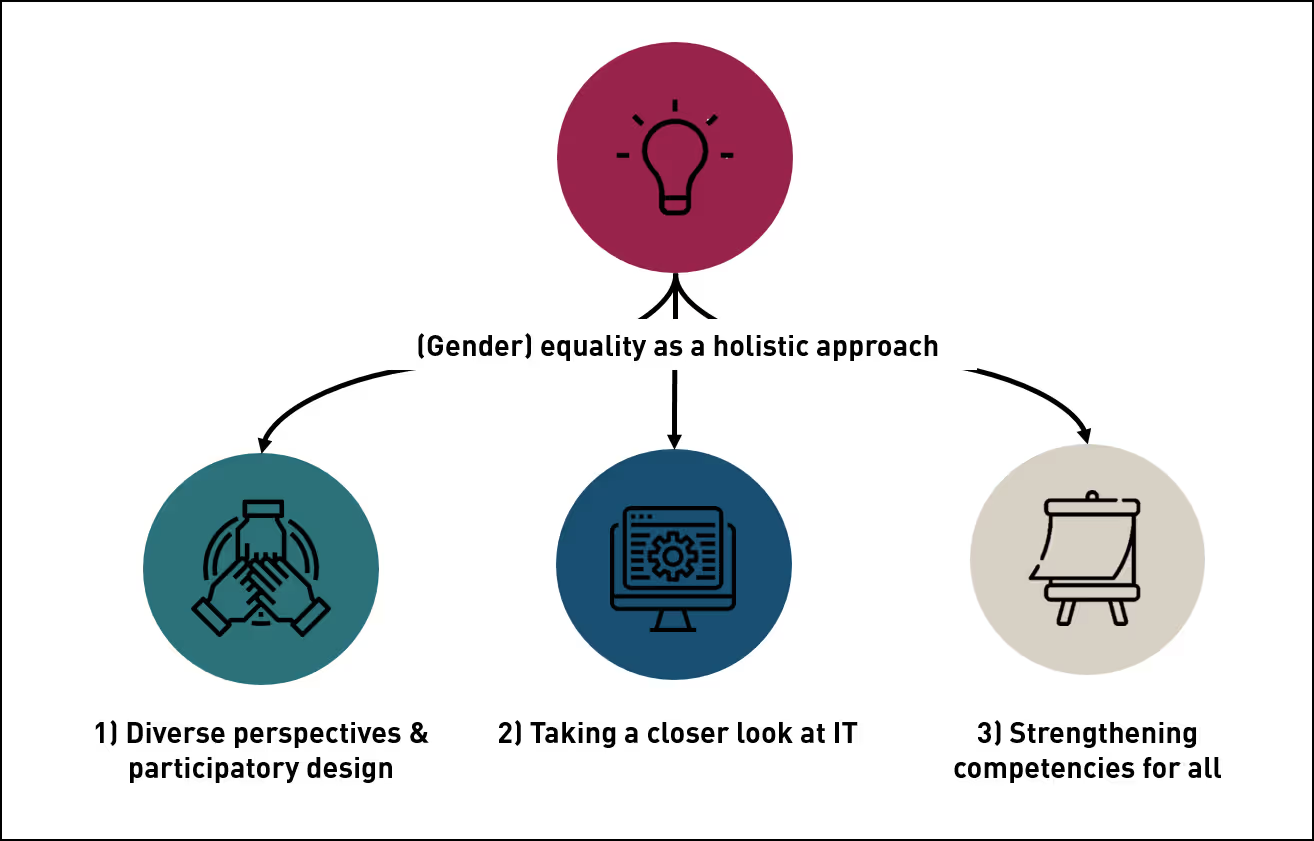
Gender equality should not only come into play once a system is launched. It needs to be considered from the very beginning—during all phases of the process: from the initial idea and needs assessment, to specification, procurement or development, testing, implementation, and long-term operation.
Diverse perspectives and participatory design
To address the needs of different user groups, diverse design teams are essential, in terms of both backgrounds and expertise. It is equally important to incorporate a variety of user perspectives and reflect on one’s own assumptions. This can mean involving potential users early on, discussing their needs, and testing prototypes together.
Take a closer look at IT – Question assumptions and prevent discrimination risks
Before implementing a digital solution, organizations should examine its purpose and underlying logic:
- Are the processes fair and gender-equitable?
- Is automation appropriate, or would manual decisions be more reliable?
- Do all people have access, or is too much technical knowledge expected?
The application itself should also be reviewed:
- Is the language inclusive?
- Do images or examples reinforce traditional gender roles?
- Is the interface intuitive for all users?
- Is there a balanced representation in illustrations and content?
Finally, the functionality:
- Are the core functions fair and gender-neutral?
- Are datasets appropriate, diverse, and of sufficient quality?
- Are automated decisions based on suitable parameters?
Building competencies – for everyone
A key part of the work is recognizing that technology is not inherently neutral. Creating fair digital systems requires active steps and deeper professional competencies in both IT and gender equality.
This includes gender and unconscious-bias training for everyone involved in IT development. It also means strengthening IT knowledge among gender-equality professionals so they can provide effective guidance. In addition, specialist departments need awareness of the risks and limitations of using digital systems in gender-equitable ways.
How can organizations embed gender equality in digital systems sustainably?
IT and diversity as cross-cutting themes
Gender equality must be considered across all digitalization projects. Training, awareness workshops, accessible materials, and designated ambassadors can support this work.
Interdisciplinary collaboration and clear responsibilities
More inclusive digital tools can only be achieved through collaboration across departments and disciplines. This may involve defining roles within development teams or establishing interdepartmental focus groups.
Guidelines, processes, and long-term structures
Clear guidelines on fair and responsible use of IT help anchor expectations. Organizations should also implement policies and processes that embed this work sustainably—for example, through systematic, gender-sensitive, and risk-based technology assessments.
This includes reviewing existing digital systems through a gender lens, defining concrete and measurable goals, and setting out related action plans. Gender-sensitive usability should become a standard design principle, supported through checklists and evaluation criteria. Regular monitoring is essential to keep developments aligned with changing needs.
Further information
Together with the Office for the Third Gender Equality Report at ISS e.V. and the Harriet Taylor Mill Institute at the Berlin School of Economics and Law, the EAF Berlin explores these topics in the event series Designing Digitalization with Gender Equity, including an upcoming roundtable on “Gender-Equitable Technology Development and Design.”
You can find Hamburg’s guideline on gender mainstreaming in digital strategies.
Kontakt
Wenden Sie sich gerne an die zuständige Ansprechperson:
Lisa Hanstein
Senior Expert

Weitere Einträge in unserem Blog





Abonnieren Sie
den Newsletter der EAF Berlin
Bleiben Sie auf dem Laufenden

Möchten Sie Vielfalt und Chancengleichheit in Ihrer Organisation aktiv umsetzen?
Es gibt keinen Beratungsprozess „von der Stange“. Daher sind alle Angebote der EAF Berlin maßgeschneidert und reichen von einem einzelnen Strategieworkshop bis zu einem mehrjährigen Projekt. Unsere Kund*innen profitieren von dem breiten Portfolio der EAF Berlin: