Municipal Action Program
Municipalities were supported through various measures in sustainably increasing the proportion of women.
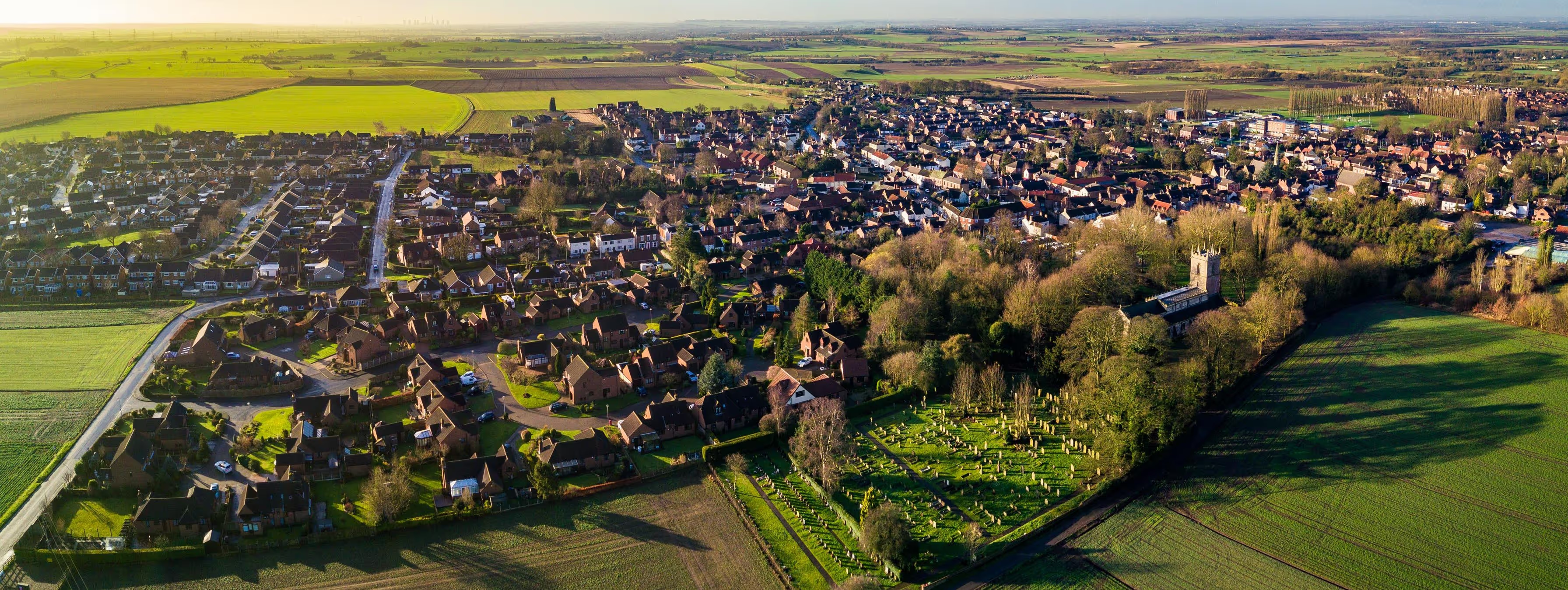
Women remain underrepresented in local politics. The reasons for this are multifaceted, rooted in both societal structures and party-political dynamics. The action program aimed to permanently increase the share of women in local representative bodies (municipal, city, and district councils) as well as the number of full-time and honorary mayors and district administrators. Therefore, it did not focus solely on women, but also sought to initiate structural changes that could positively impact women's participation and the overall appeal and acceptance of local politics. A particular focus was placed on rural regions.
Target groups and activities
The action program, which combined nationwide activities with the implementation of practical local measures, provided guidance and support to 10 selected regions in each of two cycles. The first cycle ran from early 2022 to summer 2023, and the second from spring 2023 to autumn 2024.
Over the total four-year duration (2021 to 2024), the following activities were planned:
- Networking, exchange of experience, and mentoring via a digital platform for interested women, candidates, and current officeholders in local politics, as well as the formation of regional mentoring tandems
- Motivation and empowerment of women at the regional level, including through workshops and training
- Specific networking and qualification opportunities for female mayors
- Consulting for regions on improving the framework for women's participation (e.g., meeting culture and scheduling, balancing local political office with family life, and preventing sexual harassment/everyday sexism)
- Supra-regional exchange of best practices
- Kick-off and networking meetings for participating regions
- Establishment of sustainable cooperation between relevant stakeholders at both regional and national levels.
Women and local politics
Whether in the Bundestag, state parliaments, or at the local level, women are less frequently found in political office. In local representative bodies, women hold just 27.7 percent of mandates. The situation is even worse for the office of mayor: only 9 percent of town halls are led by a woman. The share of female lord mayors is also only 11.7 percent, even though it was 17.1 percent in 2008. As of 2019, the share of female district administrators stands at just 9.5 percent.
Diverse perspectives in decision-making processes are essential for the acceptance of democratic processes and for ensuring social cohesion, especially at the local level. Given an increasingly diverse population, it is more important than ever to hear different voices and include diverse perspectives to develop sustainable local policies.
That is why the viewpoints, experiences, and skills of women are particularly needed in local politics. Women make up the majority of the population and are represented in all social groups and strata.
You can find further information here as well as at www.frauen-macht-politik.de.
Contact
If you have any questions about the project, please feel free to contact the person in charge:
Lisa Hempe
Senior Expert
Gefördert von
Bildergalerie
Für die volle Ansicht das Bild anklicken.
Kontakt
Wenden Sie sich gerne an die zuständige Ansprechperson:
.jpg)