Violence against female politicians in Germany: extent, forms, and recommendations
Violence against female politicians in Germany: Extent, forms, and recommendations
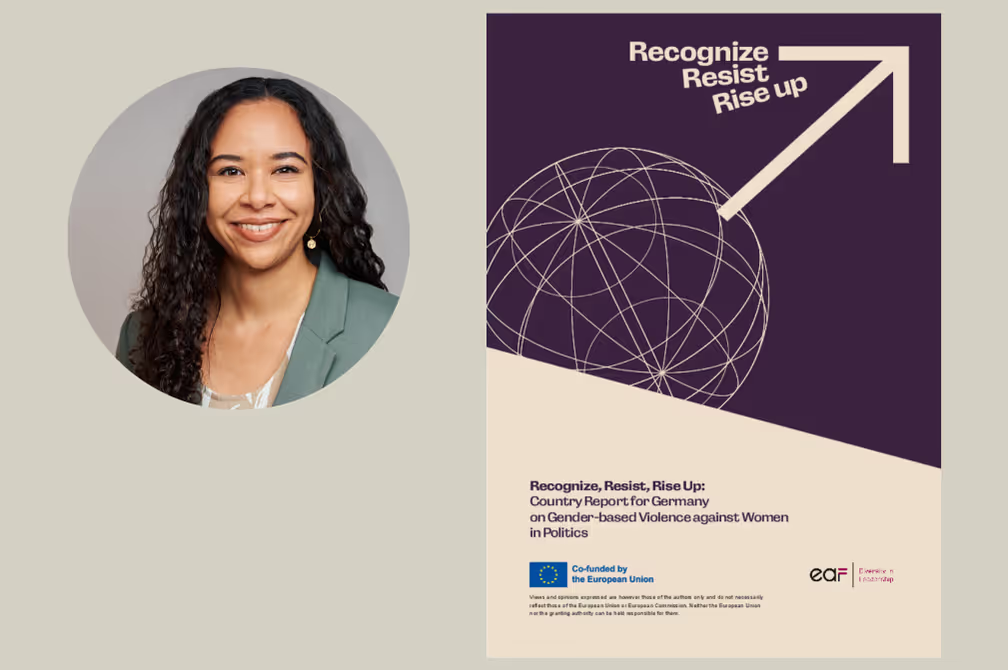
Politicians are increasingly becoming targets of attacks. Women in politics are particularly affected—often with sexist or discriminatory motives. The consequences are severe: some are withdrawing from political engagement. A new analysis by EAF Berlin describes the forms and extent of gender-based violence against female politicians and derives concrete recommendations for political actors. For the first time, the analysis captures the status quo of various forms of violence against women in politics and identifies areas for action for parliaments and parties, as well as legal gaps and support mechanisms for those affected. It was produced as part of the EU-funded project "3R – Recognize, Resist, Rise Up."
A sad normality – and a threat to democracy
Whether physical or verbal violence, online hostility, or anonymous threatening letters: surveys and studies show that violence against those involved in politics is on the rise. Women experience gender-based attacks more frequently—ranging from comments about their appearance, insults, and threats (e.g., against their families), to sexualized violence and even rape threats.
"This has serious consequences," explains author Sarah Robinson of EAF Berlin. "Not just for the women who have to deal with it. Female politicians adapt their behavior, speak out less frequently in public, or avoid certain topics. Less diversity of perspective in discourse and fewer women in politics are a threat to democracy. Especially since the proportion of women in the Bundestag is currently 32.4% and averages around 30% at the local level," says Sarah Robinson.
Hate must not be part of the job description
What forms of violence against female politicians exist, and what are their effects? What is the legal framework, and what other support services are available? Where are the gaps? For the first time, this report summarizes gender-specific figures, definitions, and information for various political levels in Germany and derives recommendations from them. The study shows: violence in politics is systemic. By providing an overview of the current state of knowledge in Germany, it establishes a foundation for making the scale visible and developing solutions, including those that are cross-border. It offers insights into the experiences of women in all their diversity, as well as the tone of discourse and the lack of solidarity, particularly regarding online hate.
Sarah Robinson emphasizes: "While progress has been made—such as collecting data, uncovering legal loopholes, and creating counseling services for those affected—more is needed: better, gender-specific data collection, a critical assessment of state measures, training and awareness-raising for police and the judiciary, guidelines and more accessible protection and counseling services for elected officials, and more prevention and intervention mechanisms during election campaigns, for example. Civil society organizations currently provide the majority of these services, but we also need greater commitment from the state. And: we need a cultural shift in parties and society. Violence in politics must no longer be seen as part of the job."
Violence against female politicians has many faces – and so do the women's experiences
Violence against women takes many forms. Physical violence, psychological violence, sexualized violence, and economic violence affect women in politics in different ways. The study also takes an intersectional approach to findings regarding women who face discrimination and/or marginalization based on their ethnicity, religion, socioeconomic status, and age, as well as trans, intersex, and non-binary individuals.
For example, women with a migration background and women of color appear to receive more sexist comments online than women without these characteristics. Some (case) studies suggest that women experience violence that is not only sexist and/or sexualized, but also motivated by racism, antisemitism, or Islamophobia. Furthermore, hostility toward politicians occurs significantly more often during election campaigns. This means that election periods, as well as the experiences of women with migration histories, disabilities, or queer identities, should be studied even more closely.
Awareness, support, prevention: There is still much to be done
The study makes it clear that a cultural shift is urgently needed. Security authorities must be even more sensitized to the specific threat situation—to the dangers for individuals and for democracy. Those affected must be taken seriously and supported. This also applies to parties: attacks on party colleagues are not uncommon within parties either—a harsh tone and the attitude that "it comes with the territory" are widespread. Those affected are less likely to seek support. We need intra-party solidarity, support services for those affected, and clear prevention mechanisms.
One of the greatest challenges, however, remains identifying and addressing perpetrators, especially in the digital space. Platform providers should more consistently identify and review illegal content and prevent its dissemination—especially in cases of violence and cybercrime. Only in this way can those affected be effectively protected.
Ultimately, there is a common goal: a clear, societal "no" to hostility and an uninhibited tone—both online and offline.
Download the study
More about the 3R project – Recognize, Resist, Rise Up – Tackling Gender-based Violence against Women in Politics
In the 3R project – Recognize, Resist, Rise Up – Tackling Gender-Based Violence against Women in Politics, five European organizations – EAF Berlin, Fórum 50% in the Czech Republic, JÓLLÉT Alapítvány in Hungary, Women for Election in Ireland, and Možnosť voľby - Freedom of Choice in Slovakia – are working to improve the protection of female politicians against hate speech and harassment. The project aims to raise awareness of the issue and enhance the safety and participation of politically active women by sharing best practices for combating and protecting against hate speech and harassment. The five project partners have produced country reports that capture background information for each nation regarding gender-based violence against female politicians. These serve as a starting point for further research and advocacy activities within the 3R project. From November 2025, English-language country reports on the situation in the Czech Republic, Hungary, Ireland, and Slovakia, as well as a comparative report (in English), will also be available for download. The project is funded by the European Union.
More information about the project.
Press contact
Nina Prehm, Senior Expert Communications
Email: prehmeaf-berlinde
Technical contact
Sarah Robinson, Senior Expert Gender & Politics
Email: robinsoneaf-berlinde