"The decline is dramatic!"
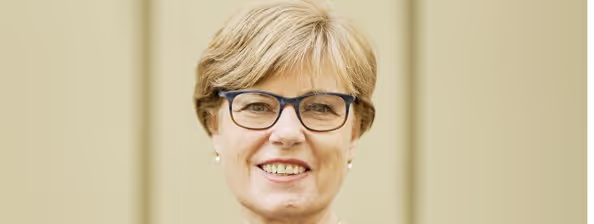
"The dramatic 11% decline in the proportion of women shows that internal party commitments are not enough to achieve lasting parity in parliaments. This is especially true as long as some parties reject quota regulations," explains Dr. Helga Lukoschat, Chair of EAF Berlin, an independent consulting and research institute that has been advocating for more women and diversity in politics and business for many years.
The drop in the proportion of women in Thuringia can be attributed to the fact that the share of women in the CDU parliamentary group fell from 30% to 10%. The CDU does not have effective quotas, but merely a quorum according to which one-third of party offices, mandates, and list positions should be allocated to women.
In addition, the AfD was able to double its seats in parliament. The AfD rejects equality measures entirely and has the lowest proportion of women of all parties at 17.1%. In the AfD parliamentary group of the Thuringian state parliament, the proportion of women is 14%.
The previous red-red-green coalition had recognized the problem and in July passed a parity law for the state parliament . This is intended to ensure that electoral lists for state elections from 2024 onwards are filled half with women and half with men. Thuringia is thus the second federal state after Brandenburg to have a parity law for a state parliament.
Further information on parity laws as well as facts and figures on the topic of women and politics can be found at www.frauen-macht-politik.de.