
Diversity in organizations
Overcome prejudices and unconscious thought patterns
.avif)
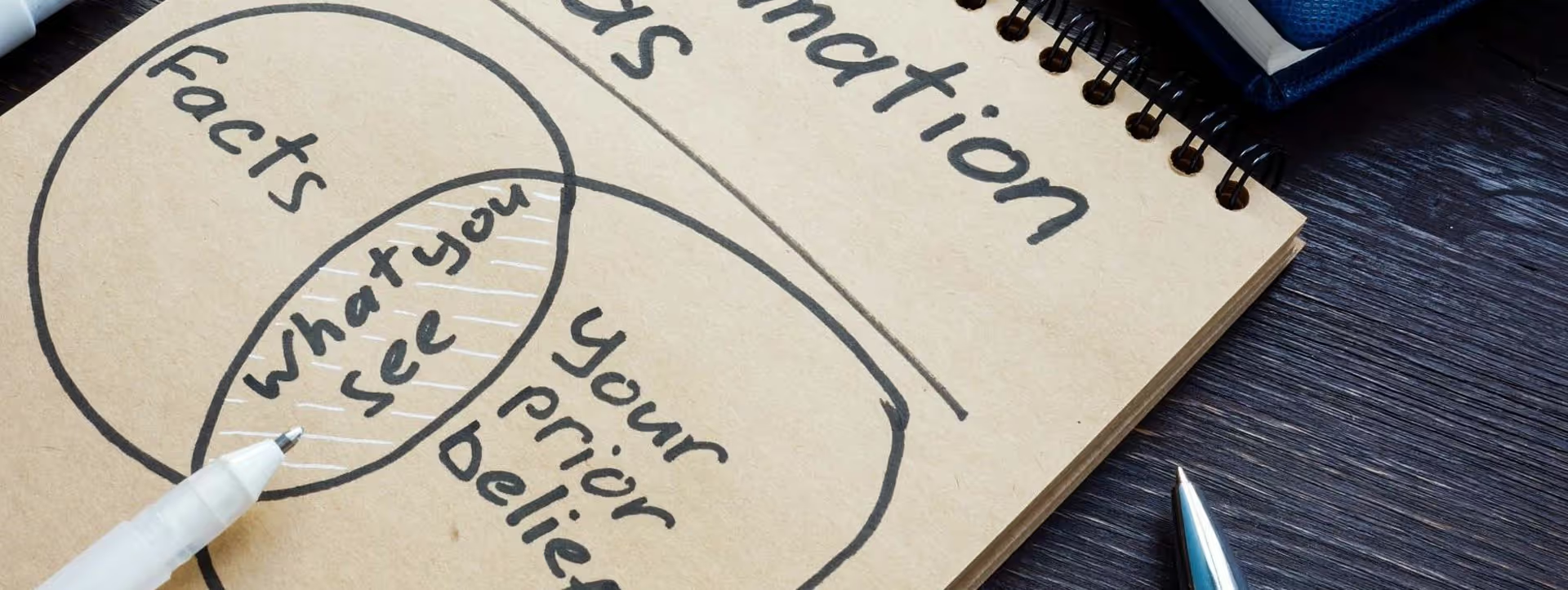
We all have prejudices. We all think in boxes, in stereotypes. One reason for this is that it makes it easier for our brain. We are aware of some of them and we can reflect on them and find new ways of dealing with them. But we are also not aware of many prejudices — so-called unconscious bias. As a result, we automatically judge people based on the categories within us, which can have negative effects on others. But how do we deal with it? Can we get rid of prejudices and if so, how?
Me and prejudices?
Kevin is not as clever as Leon; girls are worse at math than boys; the potential colleague from Spain is definitely always late, the German is always punctual: These are all common prejudices. No one likes to admit that we think “that way.” And yet we all do it because our brain does it automatically. Our brain divides people into categories based on socialization, education, and life experience. And it must do so in order to find our way in the world, but that is not an excuse that we can rest on. Because it becomes problematic when it is precisely these categories that lead us to treat other people worse and they suffer from the effects — when we make decisions in positions of responsibility that are based on these very unconscious thought patterns. For example, when a man with an accent doesn't get the job, a person wearing religious headgear isn't even invited to an interview, or the colleague with a disability is not considered competent enough for the management position. It is challenging that we humans believe that we are making completely rational decisions and that many thought patterns occur unconsciously at the same time. But unfortunately we are deceiving ourselves.
Unconscious thought patterns form the basis for discrimination. In order to combat stereotypical thinking, we must become aware of how unconscious bias occurs. Combating one's own prejudices is therefore an important basis for greater diversity in the organization or in the company and strategic diversity management.
What are unconscious bias?
Unconscious bias are therefore unconscious distortions of thought and unconscious stereotypes — cognitive distortions of perception, a socio-psychological phenomenon. They relate to the characteristics and competencies of people, such as an introvert type, gender, age, or communication style. They are based on limited facts, personal life experiences, the stories of others and corresponding representations in the media. They lead to prejudices being incorporated into our actions and thinking.
In addition to common prejudices, there are other effects: We automatically find people who are similar to us likeable and strangers rather suspect. When we get to know each other for the first time, we quickly suspect certain character traits. Because: we take mental shortcuts by automatically adding missing information about others.
Unconscious thinking patterns give us security in stressful situations, but pose a great risk of making wrong decisions.
Why is there unconscious bias?
The brain must be able to deal with information overload and make quick decisions in stressful situations. Unconscious bias is therefore basically a remnant from the past. They relieve our brain.
What does this have to do with diversity management?
Stereotypes and prejudices that are written into our brain and occur unconsciously reduce diversity in organizations. For example, employees who are similar to the corresponding manager are more likely to be promoted. Or: Great people and a confident appearance are more likely to be attributed professional competence. When people are chosen based on sympathy or self-resemblance, other people's abilities are easily overlooked or ignored. However, diverse personnel selection leads to more innovation in teams, customer satisfaction and economic success.
Unconscious thought patterns also work in a political context: stereotypes and prejudices shape party work, influence voters' decisions and within the party. Fewer women, for example, are still being recruited; They are therefore still underrepresented in politics.
Diversity in organizations
Without critically reflecting on one's own unconscious bias, there can be no diversity in organizations, parties or administration. Trainings, workshops and lectures on unconscious bias and unconscious thought patterns for employees can raise awareness and encourage them to reflect on the topic of diversity and thus help to actively combat stereotyping.
Zum Weiterlesen:
- Impliziter Assoziationstest
- https://www.charta-der-vielfalt.de/erfolgsgeschichten/zeige/fokusthema-unconscious-bias/
- Welpe, Isabell (Hrsg.): „Gendersensitive Personalauswahl und Beurteilung“
- Antidiskriminierungsstelle zu anonymen Bewerbungen
- anti-bias.at: Plattform für den Umgang mit unbewussten Vorurteilen
- Daniel Kahnemann: Schnelles Denken, Langsames Denken
Would you like to actively implement diversity and equal opportunities in your organization?
There is no "off-the-shelf" consulting process. Therefore, all EAF Berlin's offerings are tailor-made and range from a single strategy workshop to a multi-year project. Our clients benefit from EAF Berlin's broad portfolio:
Subscribe
the EAF Berlin newsletter
Stay up to date
