
More diversity in volunteering!
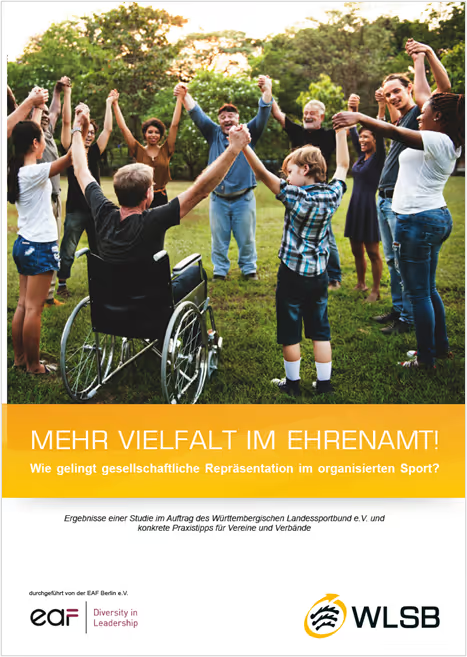
Jetzt die PDF herunterladen.
EAF Berlin and the Württemberg State Sports Association (WLSB) are publishing the results of a multi-method study on diversity in volunteer-led sports in Baden-Württemberg, thereby contributing to research on civic engagement. Key findings indicate that current volunteer boards and officials in grassroots sports often fail to represent certain social groups, and that sexism, racism, and other forms of discrimination must be dismantled.
Sports clubs are places where team spirit and community are brought to life. People of all generations come together here, actively shaping sports and community offerings both in Baden-Württemberg and across Germany. Without volunteer commitment, the diversity of these offerings would not be possible. Many clubs face the challenge of recruiting and retaining new talent for this vital work.
Baden-Württemberg is home to people of diverse genders, ages, migration backgrounds, origins, abilities, and sexual orientations. Cohesion, solidarity, and social interaction must be continuously nurtured. As part of civil society, the club landscape plays a significant role in this. At the same time, access to clubs is not equal for everyone, which is why sports clubs and associations have long been working to remove barriers and make grassroots sports more inclusive. Attracting a more diverse range of people to volunteer roles can also have a positive impact on the challenging situation regarding new recruits.
The results of this study by EAF Berlin, commissioned by the WLSB, underscore the central role that sports clubs play in social cohesion, health promotion, and local communities. They also demonstrate that this would not be possible without volunteer work.
At the same time, the study confirms that not everyone currently has equal access to or opportunities for participation in volunteer roles within sports clubs, districts, and associations. Certain social groups—such as women, young people, individuals with a migration background, those with disabilities or chronic illnesses, people without academic degrees, and especially queer individuals—are significantly underrepresented on boards. It can be assumed that this also applies to the membership base in a portion of these clubs.
The reasons for this are complex and can be social, structural, or individual in nature. Within volunteer-led grassroots sports, the fact that some individuals and groups find it easier to get involved than others is linked to common recruitment pathways, personal networks, and the general framework within the club landscape. Some of these hurdles can be actively and successfully addressed by local clubs.
Furthermore, certain groups and individuals are more likely to experience exclusion or disadvantage and are therefore subject to discrimination. Nearly one in three respondents has witnessed such incidents. Gender-based disadvantage and sexism are the most frequently reported issues.
However, other forms of unequal treatment, prejudice, and exclusion—such as those based on age, migration history, skin color, or being queer—also represent a serious problem. Many clubs are already working continuously to become more accessible and inclusive for everyone and to reduce discrimination. They are often confronted with bureaucratic hurdles and rigid legal requirements. Improving local representation therefore requires, among other things, the corresponding political will. At the same time, inclusion and representation can only be achieved through continuous local efforts, which in turn allows for an active and sustainable response to existing recruitment challenges.
This brochure presents the key findings of the study in a concise format and derives concrete recommendations for sports clubs. These are supplemented by information on good practice examples and support services provided by the WLSB.
.avif)